Remote Work on a Tourist Visa in Vietnam: What the Law Says
A tourist visa (DL) is issued for tourism, and your activities in Vietnam must match your purpose of entry. A foreign worker in Vietnam needs a work permit or an exemption confirmation. Working without one is fined VND 15,000,000 to 25,000,000. The fine articles do not say whether remote work for an employer abroad counts.
On this page
- Short answer
- Which case are you?
- Worked scenarios
- DL, LĐ1 and LĐ2: what each visa is for
- Stay periods by entry route
- Who counts as a foreign worker in Vietnam
- Fines and deportation
- If your stay runs out while you work
- Papers to carry and where you live
- Is there a digital nomad visa?
- The tax question is separate
- Where to ask in Nha Trang
- Common questions
Hoạt động tại Việt Nam phải phù hợp với mục đích nhập cảnh
A foreigner who enters, exits or resides in Vietnam must carry out activities in Vietnam that match the purpose of their entry. Law 47/2014/QH13, Điều 44 khoản 2 điểm b
A tourist visa is issued for tourism. Working in Vietnam as a foreign worker needs a work permit or an exemption confirmation. Whether remote work for an employer abroad counts as work is the one question the law text leaves open.
Short answer
- Risk: practising a trade without permission is fined VND 15,000,000 to 20,000,000. Activity outside your declared purpose is fined VND 20,000,000 to 25,000,000. Working without a permit or exemption confirmation is fined VND 15,000,000 to 25,000,000.
- Do now: work in Vietnam as a foreign worker only with a work permit or an exemption confirmation. A tourist visa is issued for tourism.
- Lawyer: the fine articles do not name remote work. Hire an immigration lawyer before you rely on a tourist visa for it.
Which case are you?
- You only travel and do no work: a DL visa is issued for tourism.
- You work in Vietnam as a foreign worker: you must hold a work permit unless an exemption applies. See work permit in Nha Trang.
- An organisation sponsors you to work, and you hold a work permit or exemption confirmation: your visa’s purpose can be changed.
- You entered on an e-visa and hold a work permit or exemption confirmation: your visa’s purpose can be changed.
- You work for an employer or clients abroad: the fine articles do not name this case.
- You want a dedicated digital nomad visa: the law texts found do not provide one. The UĐ1 visa is for high-quality digital technology industry personnel.

Worked scenarios
Each row gives what the cited text says. None of them settles the remote-work question.
| Scenario | What the law text says |
|---|---|
| A two-week beach holiday, no work | A DL visa is issued for tourism. Your activities must match the purpose of entry. |
| A short trip to offer a service for sale, under 3 months | Entering for under 3 months to offer a service for sale is exempt from the work permit. The employer notifies at least 3 working days before. |
| A manager or expert in Vietnam under 90 days in a calendar year | Exempt from the permit. The same 3-working-day notice applies. |
| A job with a Vietnamese company | A work permit is required. The visa is LĐ2. |
| A sponsored worker with a permit, on a tourist visa | The visa’s purpose can be changed in Vietnam. |
| Laptop work for an employer abroad | Not named in the fine articles. |
DL, LĐ1 and LĐ2: what each visa is for
Each visa symbol is issued for a stated purpose.
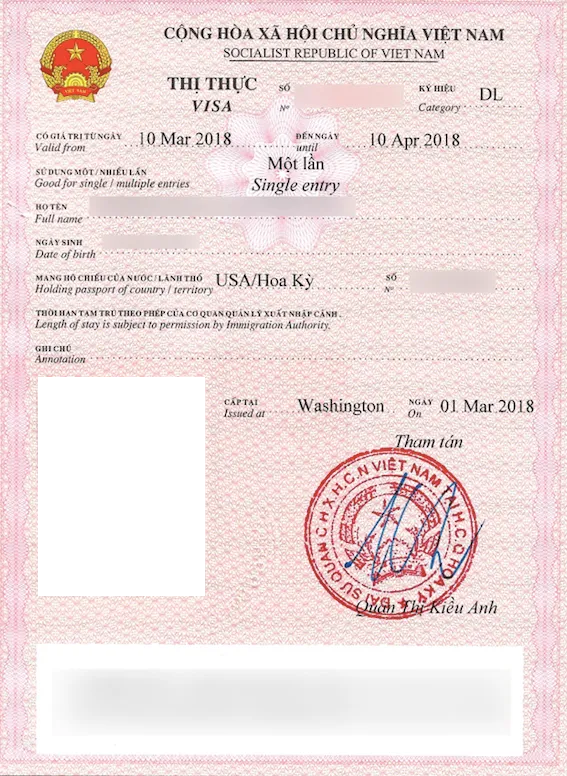
- DL is issued to a person entering Vietnam for tourism.
- LĐ1 is issued to a foreigner working in Vietnam who has confirmation of exemption from the work-permit requirement, unless a treaty Vietnam is party to provides otherwise.
- LĐ2 is issued to a foreigner working in Vietnam who is required to hold a work permit.
Nothing in these three definitions describes remote work for an employer or clients outside Vietnam. LĐ1 and LĐ2 visas are valid for a maximum of 2 years. For the other symbols, see Vietnam visa types.
A visa’s purpose generally cannot be changed. The law lists exceptions, including a holder with documents proving they are an investor, or a representative of a foreign organisation investing in Vietnam. Two more cover work: sponsored entry with a work permit or exemption confirmation, and e-visa entry with the same documents.
Both work exceptions need a work permit or exemption confirmation, and neither mentions remote work. When the purpose is converted, a new visa is issued with the symbol and validity of the new purpose.
Stay periods by entry route
The stay period depends on how you entered. The table gives the periods. The purposes matter too, because the activity must match the purpose of entry.
| Entry route | Stay | Purpose limit |
|---|---|---|
| DL or EV visa | Visa valid for a maximum of 90 days | DL: tourism |
| DL visa valid for more than 30 days | 30 days granted at the border; extension considered | DL: tourism |
| Visa exemption, 12 named countries | 45 days from entry, from 15 March 2025 to 14 March 2028 | Any purpose |
| Visa exemption, 12 European countries | 45 days, from 15 August 2025 to 14 August 2028 | Tourism only |
The two exemption lists differ on purpose, so check yours in Vietnam visa exemption in Nha Trang. The e-visa route is in the e-visa guide. Extension steps are in extending your visa in Nha Trang.
Who counts as a foreign worker in Vietnam
The Labor Code applies to “a foreign worker working in Vietnam”. It requires that person to hold a work permit from the competent Vietnamese state agency, except in the cases listed in Article 154 of the Code.
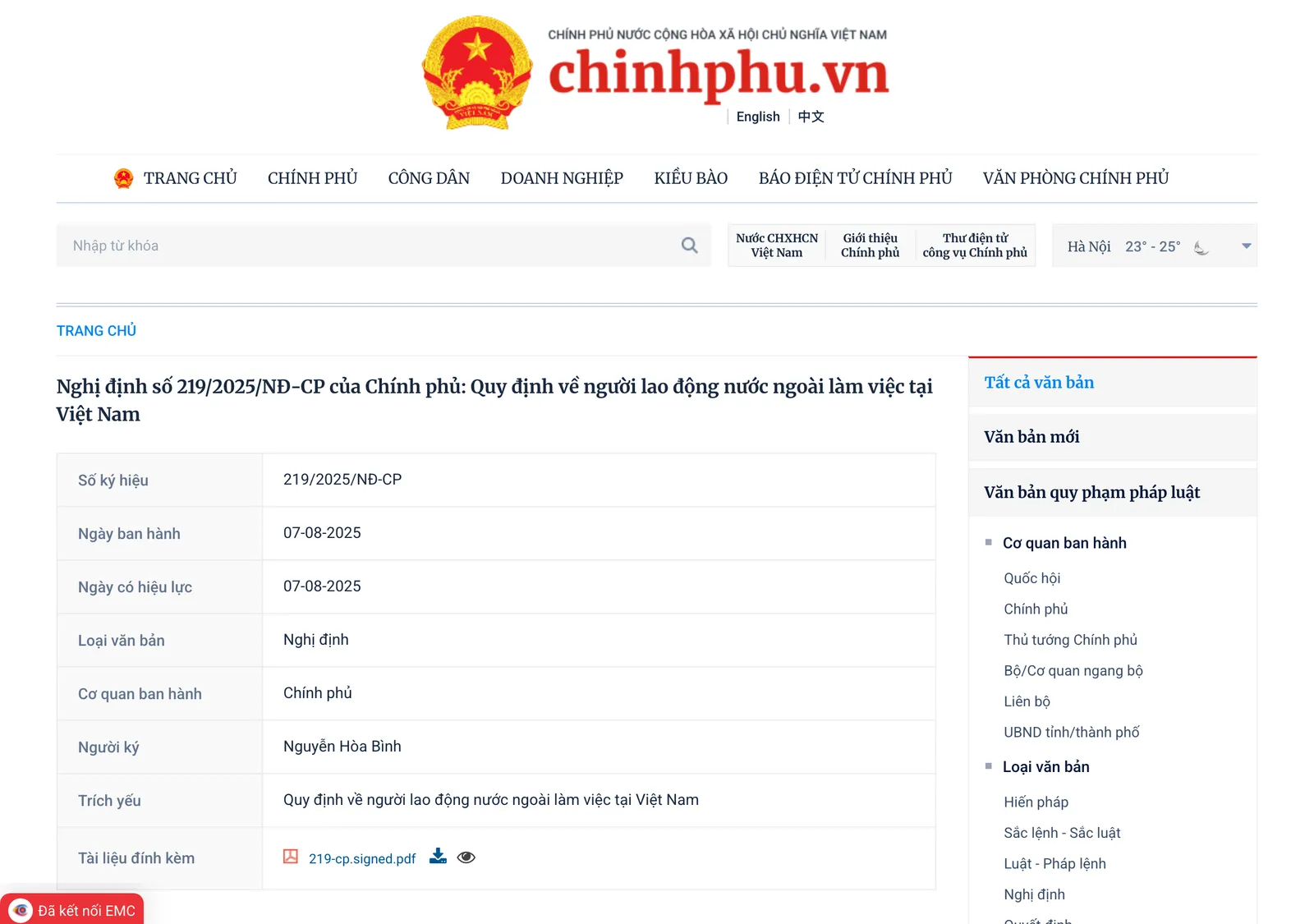
Decree 219/2025/NĐ-CP defines the foreign worker as a foreign citizen who enters to work in a position set out in Article 3. The work must take one of the listed forms.
The forms include performing a labour contract, an intra-company transfer, performing contracts or agreements on economic or social matters, and offering services for sale. None of the listed forms names remote work for an employer outside Vietnam. The work-permit process is in work permit in Nha Trang.
Fines and deportation
Three fines can come into play, all for an individual.
- Entering and practising a profession, trade or other activity without permission from a competent authority: VND 15,000,000 to 20,000,000.
- Engaging in activity inconsistent with the purpose or programme declared when applying for a visa, residence card or stay extension: VND 20,000,000 to 25,000,000.
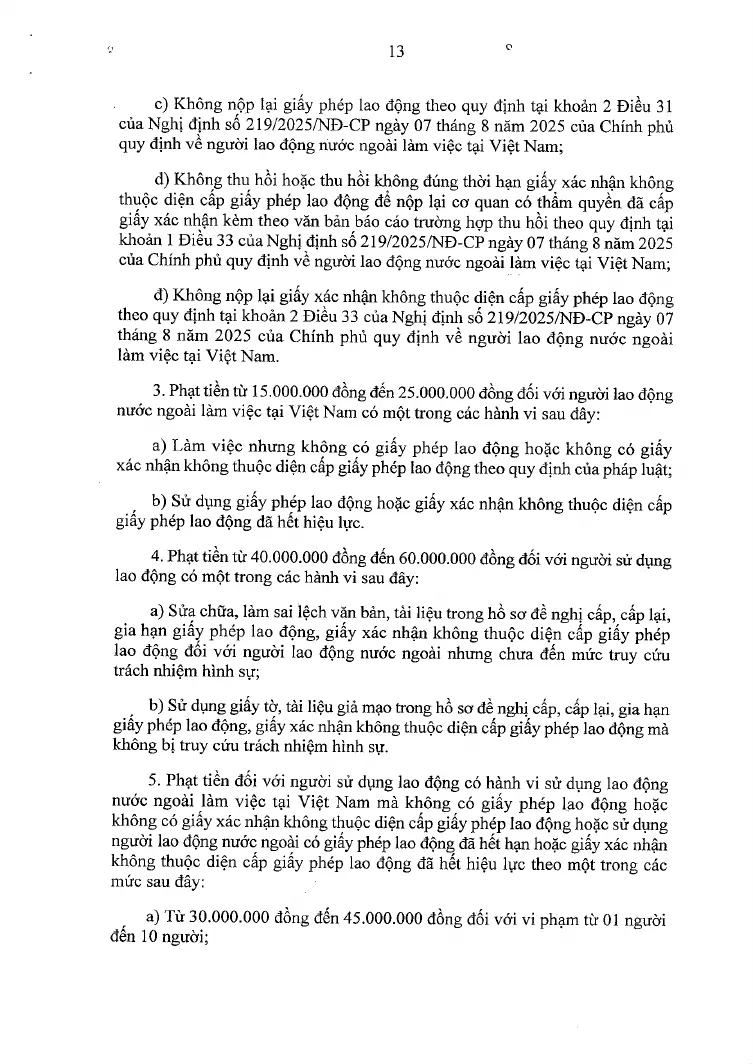
- A foreign worker working without a permit or exemption confirmation, or with an expired one: VND 15,000,000 to 25,000,000.
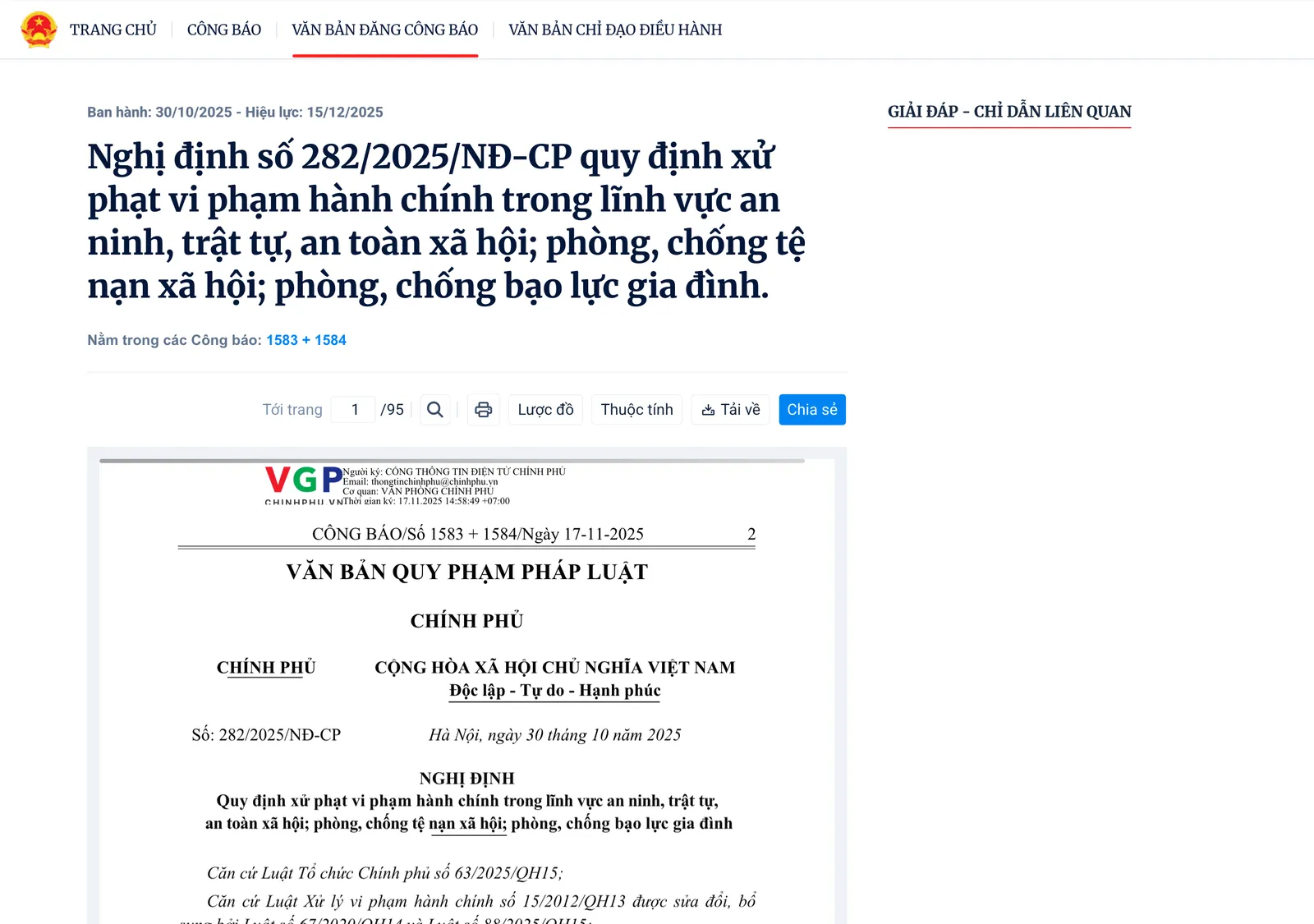
An organisation found responsible for the same violation pays double. Deportation can be added to the first two fines, decided on the nature, extent and consequences of the violation, the offender and mitigating or aggravating circumstances. Decree 283/2026/NĐ-CP also provides for deporting a foreign worker without a permit.
The specific fine is the midpoint of the band. Mitigating circumstances can lower it but not below the band minimum, and aggravating ones can raise it but not above the maximum. A fined person must pay within 10 days of receiving the decision, unless the decision states a longer deadline.
A foreigner with an administrative-penalty decision still to fulfil can be temporarily barred from leaving Vietnam. Such a bar cannot exceed 3 years, though it can be extended.
If your stay runs out while you work
Overstaying is an administrative violation from the first day past the permitted period. Fines for an individual under Decree 282/2025/NĐ-CP rise with the days overstayed.
| Days past the permitted stay | Fine (VND) |
|---|---|
| Under 16 days | 500,000 to 2,000,000 |
| 16 to under 30 days | 5,000,000 to 10,000,000 |
| 30 to under 60 days | 10,000,000 to 15,000,000 |
| 60 to under 90 days | 15,000,000 to 20,000,000 |
| 90 to under 180 days | 20,000,000 to 25,000,000 |
| 180 days to under 1 year | 25,000,000 to 30,000,000 |
| 1 year or more | 30,000,000 to 40,000,000 |
Deportation can be applied as an additional penalty for an overstay of 16 days or more; it is a discretionary decision. A deported foreigner is refused entry for 3 years from the date the decision took effect. A forced exit carries a refusal of 6 months.
A foreigner who has overstayed should go promptly to the Immigration Management Office of the provincial police where they stay, to report and pay the fine. Full detail is in Vietnam overstay fines in Nha Trang.
Papers to carry and where you live
A foreigner moving around Vietnam must carry a passport or international travel document and the residence papers, and present them when an authority asks. Walking around without them is warned or fined VND 300,000 to 500,000. Failing to present them on request is fined VND 500,000 to 2,000,000.
A foreigner staying in Vietnam declares the residence through the accommodation, which asks for the passport and residence papers first. If you work from a rented flat or a coworking space, the stay is still registered at the accommodation; see temporary residence registration in Nha Trang.
Is there a digital nomad visa?
The law texts found do not provide a visa named for remote workers. A new symbol, UĐ1, is issued to high-quality digital technology industry personnel. It also covers cases given preferential treatment under a law or a resolution of the National Assembly or its Standing Committee.
UĐ1 and four other symbols are valid for no more than 5 years. Its definition does not mention remote work for a foreign employer. UĐ1 holders are among the visa holders who can receive a temporary residence card. The wider list of visa symbols is in Vietnam visa types.
A separate 2025 Government decree creates a time-limited visa exemption for priority groups, including scholars, scientists, professors and high-quality digital technology industry personnel. It is not a route for freelancers. The exemption needs a written request from a ministry, a Government agency or a Party or National Assembly body.
The tax question is separate
Your visa category and your tax status are separate tests. The personal income tax law takes effect on 1 July 2026, and its rules on wages of a resident individual apply from the 2026 tax period.
| Situation | Tax rule |
|---|---|
| Present in Vietnam 183 days or more in a calendar year, or in 12 consecutive months from first arrival | A resident individual. Taxed on income arising inside and outside Vietnam. |
| A home rented to live in, with leases totalling 183 days or more in the tax year | Also a resident individual. |
| A regular residence in Vietnam, under 183 days present, and no proof of residence in any other country | A resident individual of Vietnam. |
| Not a resident, working in Vietnam | Wages for work performed in Vietnam are taxed at 20%. |
| Not a resident, working in Vietnam and abroad at once | Vietnam-source income uses days present divided by 365 days times global wages. |
| Paid by a foreign employer not registered for tax in Vietnam | You declare and pay the tax yourself. A resident paid from abroad files quarterly. |
The deadline for a quarterly filing is the last day of the first month of the following quarter. Tax paid abroad is credited against Vietnamese tax where a double-taxation agreement exists.
A foreigner who has not completed their tax obligations must complete them before leaving Vietnam. A foreign individual with tax debt past the deadline can have their exit suspended.
Where to ask in Nha Trang
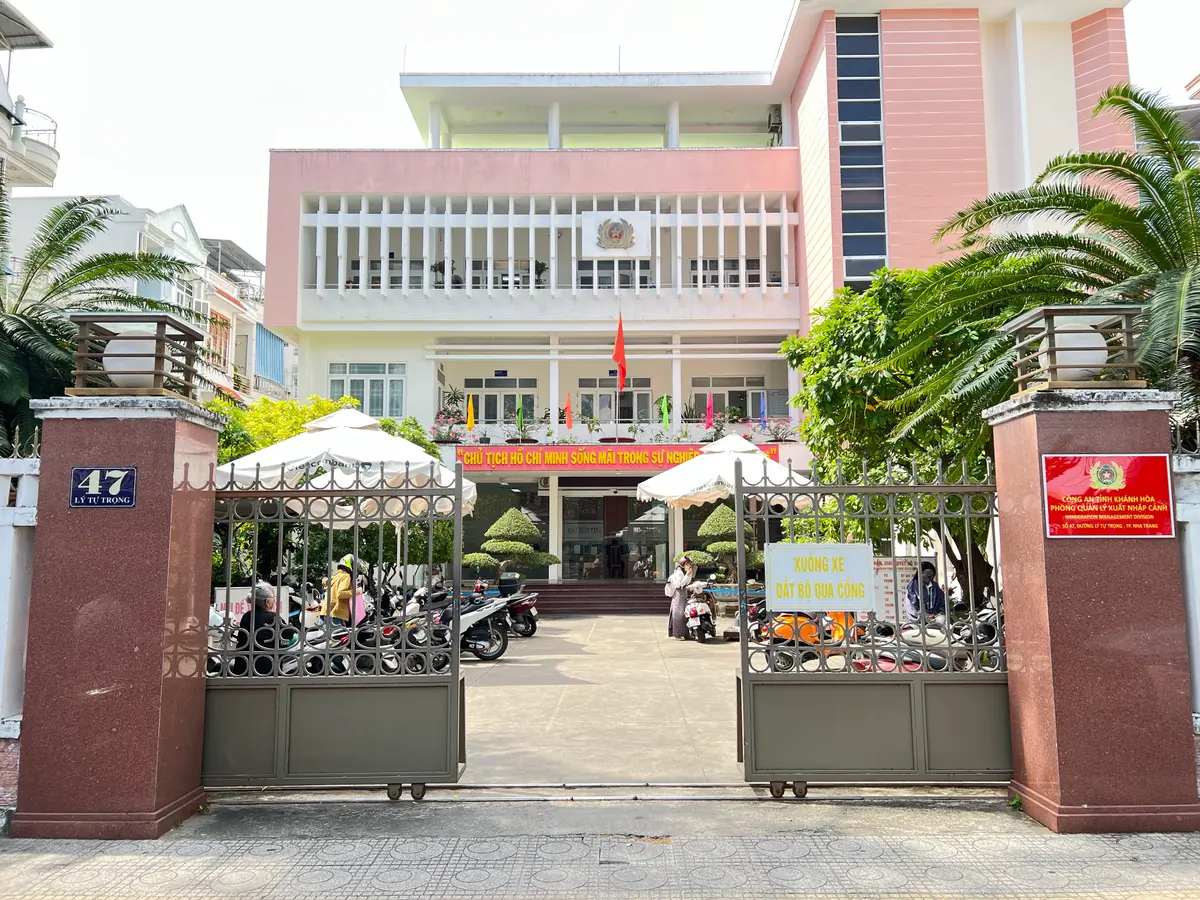
The Khanh Hoa police list their immigration procedures under the Immigration Management Division. In a notice of 27/06/2025, the division said it would receive applications in person at 47 Ly Tu Trong, Loc Tho, Nha Trang. The division is the office to put the purpose-of-entry question to; see the Nha Trang immigration office guide.
If you stay for months, the coworking guide lists day-pass and monthly prices for a desk. A coworking desk does not change your visa category. For stay length, see extending your visa in Nha Trang.
Photos and clips uploaded to Google Maps (Khanh Hoa immigration office on Google Maps (opens in a new tab)) by @Evgenii Lukashevich.
Not confirmed: No source says whether remote work for an employer or clients outside Vietnam counts as unpermitted activity, as activity outside your declared purpose, or as work needing a permit. Ask the Nha Trang immigration office or an immigration lawyer before you rely on a tourist visa.
Common questions
Can you work remotely from Nha Trang on a tourist visa (DL)?
The law does not say. It requires your activities to match your purpose of entry, and it fines unpermitted activity and activity outside your declared purpose. Neither fine names remote work for a foreign employer.
What is the difference between a DL visa and an LĐ1 or LĐ2 visa?
DL is issued to a person entering Vietnam for tourism. LĐ1 is for a foreigner working in Vietnam with confirmation of exemption from the work-permit requirement. LĐ2 is for a foreigner working in Vietnam who is required to hold a work permit.
Can a tourist visa be switched to a work visa without leaving Vietnam?
A visa's purpose generally cannot be changed. One exception is a holder invited or sponsored to work who holds a work permit or an exemption confirmation. Another is an e-visa entrant with a work permit or an exemption confirmation.
What is the fine for working without permission in Vietnam?
Practising a profession, trade or other activity without permission is fined VND 15,000,000 to 20,000,000. Activity outside your declared purpose is fined VND 20,000,000 to 25,000,000. A foreign worker without a permit or exemption confirmation is fined VND 15,000,000 to 25,000,000.
Can you be deported for working on a tourist visa?
Deportation is possible for the first two fines. Whether it is added depends on the nature, extent and consequences of the violation, the offender and any mitigating or aggravating circumstances. Decree 283/2026/NĐ-CP also provides for deporting a foreign worker without a permit.
Does Vietnam have a digital nomad visa?
The law texts found do not provide a visa named for remote workers. The UĐ1 visa is issued to high-quality digital technology industry personnel and to cases given preferential treatment under a law or resolution. UĐ1 is valid for no more than 5 years.
Do organisations pay more than individuals?
The fine amounts in the immigration decree are for an individual, and an organisation found responsible for the same violation pays double.
How long can a tourist stay in Vietnam?
A DL or EV visa is valid for a maximum of 90 days. A DL visa valid for more than 30 days is granted 30 days at the border, with an extension considered. Visa-exempt entrants get 45 days.
What is the fine for overstaying while working remotely?
An overstay under 16 days is fined VND 500,000 to 2,000,000. An overstay of one year or more is fined VND 30,000,000 to 40,000,000.
Does working from Nha Trang make you pay Vietnamese tax?
Tax is a separate test from the visa. A person present 183 days or more in a calendar year is a resident individual, taxed on income arising inside and outside Vietnam.
Read next
General information checked against the sources listed above, not legal advice for your situation. Rules and office practice change; confirm with the immigration office or a licensed adviser before you act. See how guides are checked.
Spotted an error? Report it.