Vietnam Visa Exemption for Nha Trang: Who Gets How Many Days
Find your passport on the lists. Twelve named countries, including Germany, France and Japan, get 45 days for any purpose, for entries through 14 March 2028. Twelve more European countries get 45 days for tourism, through 14 August 2028. Bilateral deals give 14 to 90 days.
On this page
Which case are you?
Start with one question: does your passport get a visa-free stay, and for how long?
- German, French, Italian, Spanish, UK, Russian, Japanese, South Korean, Danish, Swedish, Norwegian or Finnish passport → 45 days from entry, any passport type and any purpose. The exemption covers entries through 14 March 2028.
- Belgian, Bulgarian, Croatian, Czech, Hungarian, Luxembourg, Dutch, Polish, Romanian, Slovak, Slovenian or Swiss passport → 45 days from entry, for tourism. The exemption covers entries through 14 August 2028.
- Cambodian, Lao, Thai or Singaporean ordinary passport → up to 30 days. Singapore adds a return or onward ticket.
- Chilean or Panamanian ordinary passport → up to 90 days, if the visit is not for paid activity.
- Malaysian, Indonesian, Myanmar, Philippine, Bruneian, Belarusian, Kazakh, Kyrgyz or Mongolian passport → 14 to 30 days by country: see the table below.
- Any other passport → none of these lists covers you. Apply for an e-visa: US$25 for a single entry, decided in no more than 3 working days from a complete application and the fee. E-visas are open to citizens of all countries. See the Vietnam e-visa guide.
- You want to stay past the limit → an extension may be considered, filed by your sponsor. The government fee is US$10. See how to extend your visa in Nha Trang.
The table lists the exemptions in the two resolutions and in the Foreign Ministry’s directory of bilateral deals, which says it is updated to 14 March 2025.
| Countries / status | Maximum stay | Basis |
|---|---|---|
| Germany, France, Italy, Spain, United Kingdom, Russia, Japan, South Korea, Denmark, Sweden, Norway, Finland | 45 days from entry | First resolution, for entries through 14 March 2028. |
| Belgium, Bulgaria, Croatia, Czechia, Hungary, Luxembourg, Netherlands, Poland, Romania, Slovakia, Slovenia, Switzerland | 45 days from entry, tourism | Second resolution, for entries through 14 August 2028. |
| Cambodia, Laos, Thailand | 30 days | Bilateral agreement. |
| Singapore | 30 days, with a return or onward ticket | Bilateral agreement. |
| Indonesia | 30 days in the directory of 14 March 2025 | Bilateral agreement; the stay cannot be extended. |
| Malaysia | 30 days, listed purposes | Bilateral agreement. |
| Myanmar | 30 days, not for work or commercial activity | Bilateral agreement, mutual. |
| Philippines | 21 days, with a return or onward air ticket | Bilateral agreement. |
| Brunei | 14 days | Bilateral agreement. |
| Chile, Panama | 90 days, not for paid activity | Bilateral agreement. |
| Belarus | 30 days, up to 90 days per calendar year | Bilateral agreement. |
| Kazakhstan | 30 days per entry, up to 90 days in any 180 | Bilateral agreement. |
| Kyrgyzstan | 30 days | Bilateral agreement. |
| Mongolia | 30 days, not for paid activity | Bilateral agreement. |
| Phu Quoc island, any nationality | 30 days | Separate island rule. |
| Overseas Vietnamese with an exemption certificate | 6 months per entry | Exemption certificate rule. |
First resolution: a fixed list of countries
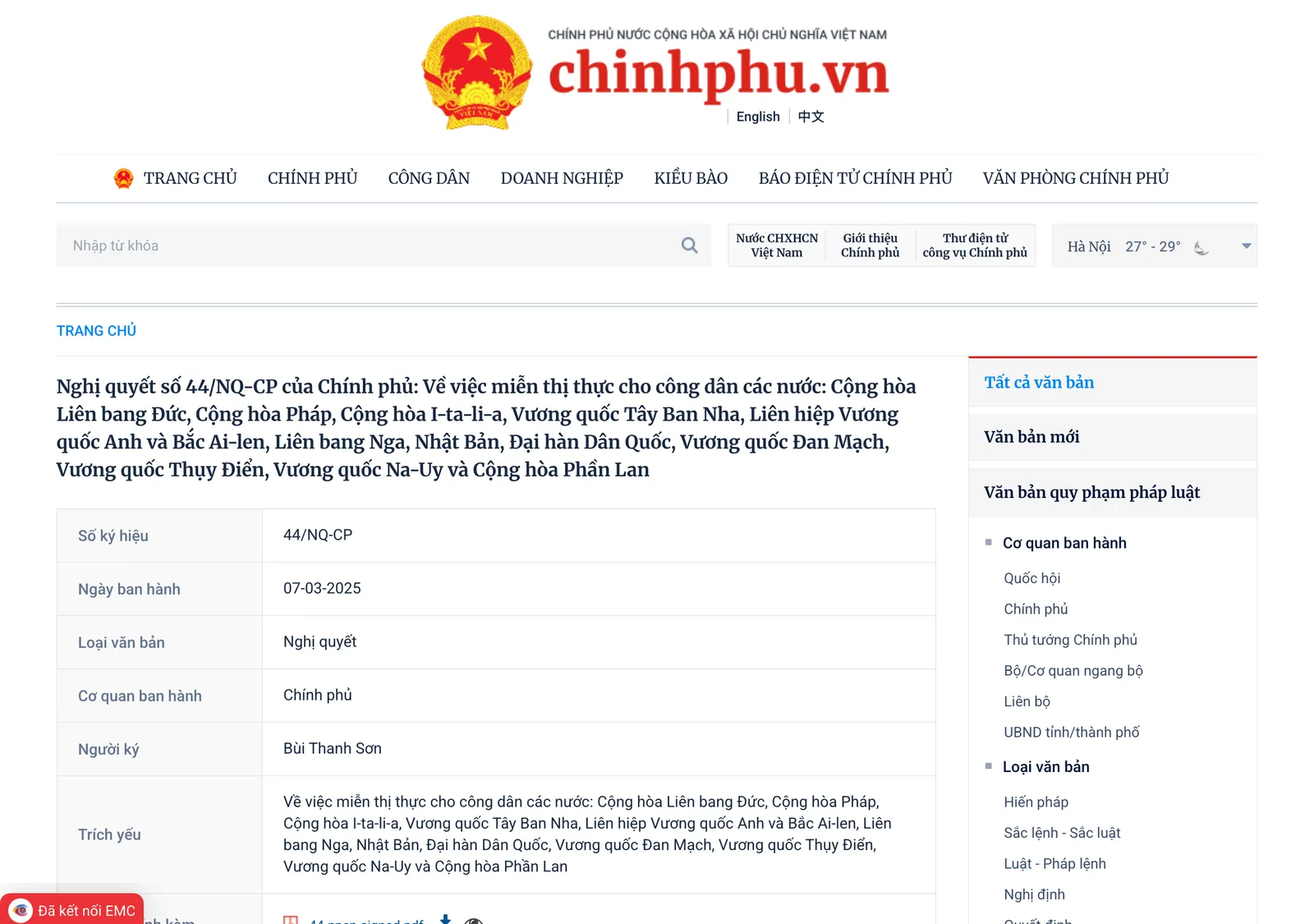
The first resolution names Germany, France, Italy, Spain, the United Kingdom, Russia, Japan, South Korea, Denmark, Sweden, Norway and Finland. Its text sets the stay at 45 days from the day of entry.
với thời hạn tạm trú 45 ngày kể từ ngày nhập cảnh, không phân biệt loại hộ chiếu, mục đích nhập cảnh …
A stay of 45 days from the date of entry, whatever the passport type or the purpose of entry.
Resolution 44/NQ-CP, Điều 1
The exemption applies to entries from 15 March 2025 through the end of 14 March 2028. It applies if you meet all of Vietnam’s entry conditions.
Second resolution: a tourism exemption
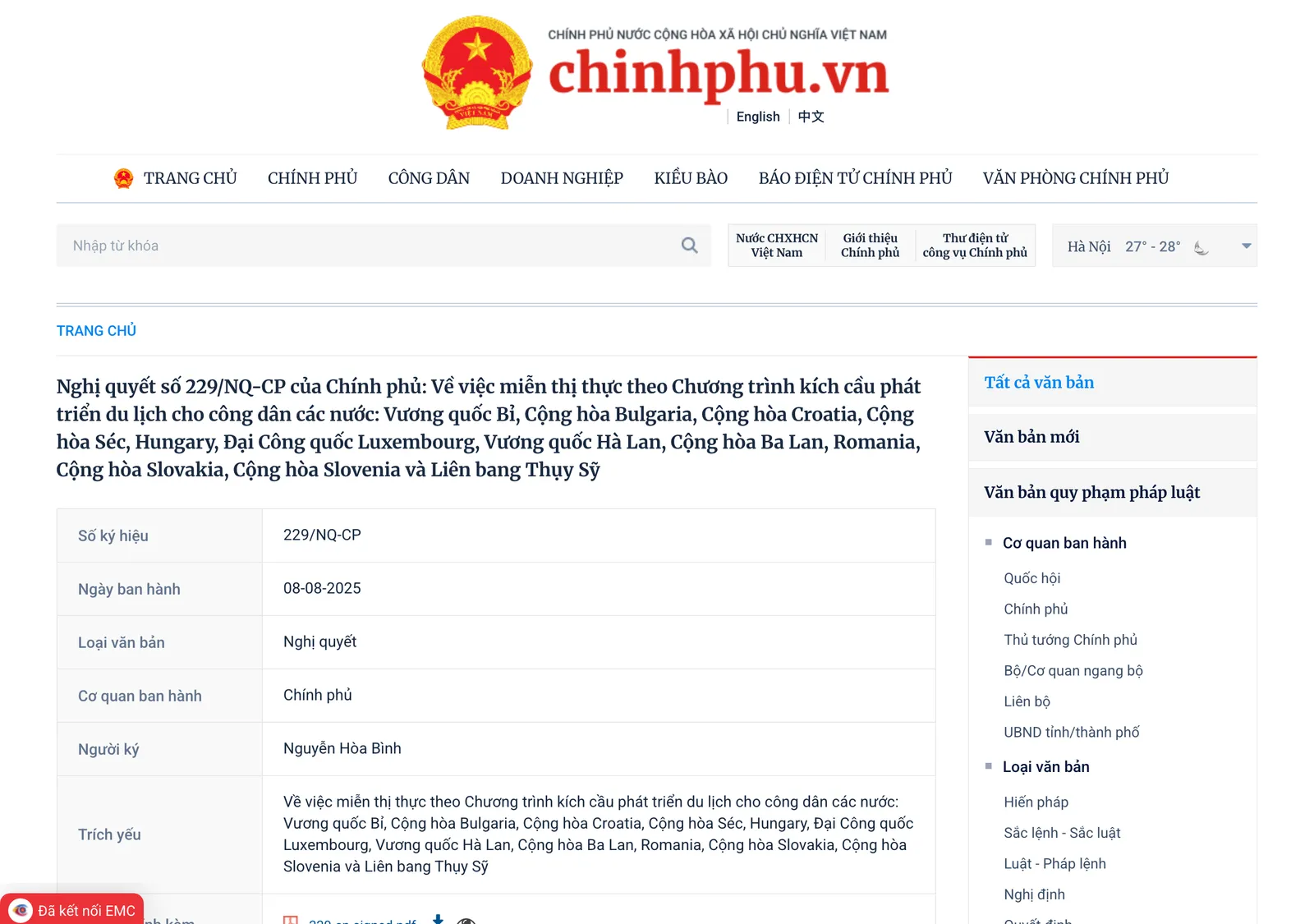
A separate resolution covers Belgium, Bulgaria, Croatia, Czechia, Hungary, Luxembourg, the Netherlands, Poland, Romania, Slovakia, Slovenia and Switzerland. It also gives 45 days from entry, for tourism, whatever the passport type.
It covers entries from 15 August 2025 through the end of 14 August 2028, under the tourism stimulus programme. Entry conditions apply here too.
ASEAN and other bilateral exemptions
Bilateral exemptions, by country:
- Cambodia, Laos and Thailand: ordinary-passport holders get up to 30 days.
- Singapore: up to 30 days, with a return or onward ticket, enough money for your stay and the documents for the next country, including a visa.
- Indonesia: 30 days in the Foreign Ministry’s directory, and the stay cannot be extended.
- Malaysia: 30 days for tourism, journalism, official business, visiting relatives, trade negotiations, investment, sport, and conferences or seminars.
- Myanmar: up to 30 days from entry, not for work or other commercial activity.
- Philippines: 21 days, with a return or onward air ticket.
- Brunei: 14 days.
- Chile and Panama: up to 90 days, if the visit is not for any income-earning activity.
- Belarus: 30-day stays, up to 90 days in total in a calendar year.
- Kazakhstan: up to 30 days from entry, and no more than 90 days in any 180-day period.
- Kyrgyzstan: 30 days.
- Mongolia: 30 days, if the visit is not for any income-earning activity.
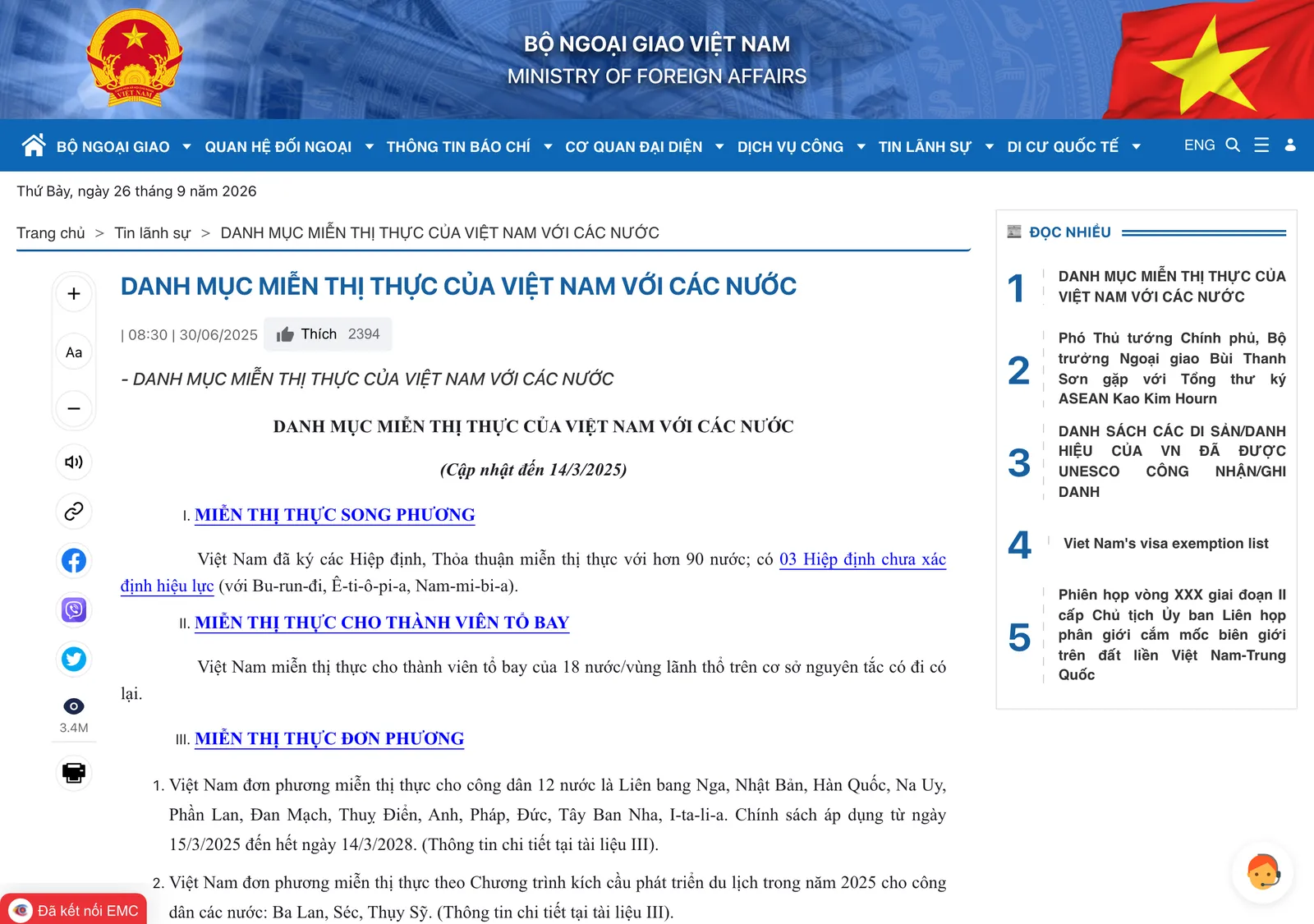
The Foreign Ministry’s directory still lists 30 days for Indonesia, but it was last updated on 14 March 2025. Whether that exemption has since been removed or shortened is unclear: ask a Vietnamese embassy before you fly.
Vietnam and Timor-Leste signed a visa exemption agreement for ordinary-passport holders during a visit in June 2026. Its stay length and start date are not confirmed, so do not count on it yet.
Phu Quoc island: a separate rule
Phu Quoc has its own rule, separate from every list above. Foreigners entering, leaving or staying on Phu Quoc island are visa-exempt for up to 30 days.
A foreigner who enters through another international gate, waits in its transit area and then goes on to Phu Quoc is also exempt. The rule is written for the island itself. For a stay in Nha Trang you still need an exemption for your nationality, an e-visa or a visa.
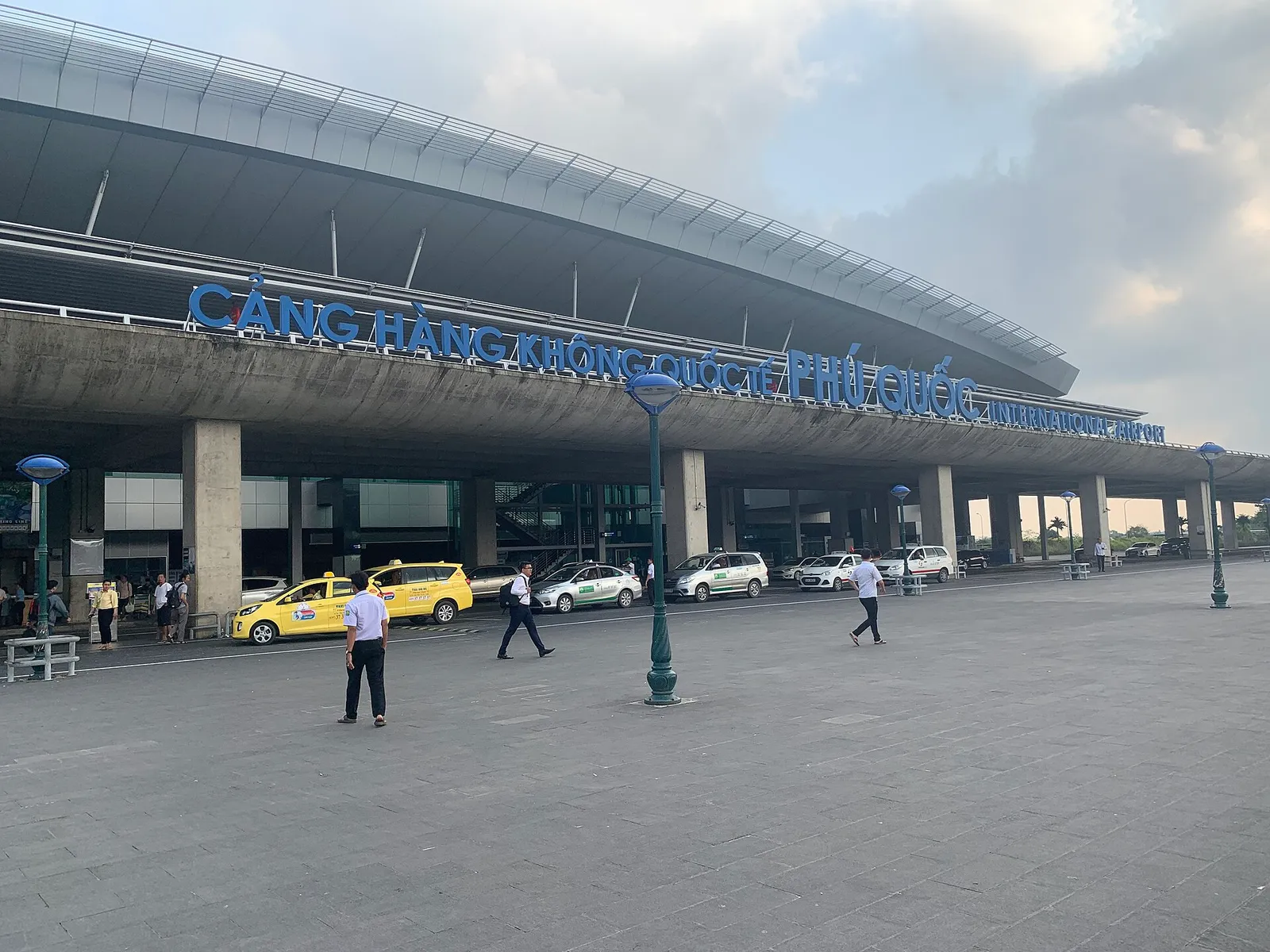
Passport rules, re-entry and arriving at Cam Ranh
Under the unilateral exemptions, your passport needs at least 6 months of validity left on entry. Most bilateral deals set a similar rule, among them those with Cambodia, Laos, Singapore, Myanmar, Brunei and the Philippines.
You also have to meet the general entry conditions, which include not falling into a case where entry is refused.
There is no waiting period between visa-free entries under the unilateral exemptions. The 2014 law made entrants wait at least 30 days after their last exit. The 2019 amendment replaced that article and dropped the wait. Bilateral caps still count: Belarus allows 90 days per calendar year and Kazakhstan 90 days in any 180.
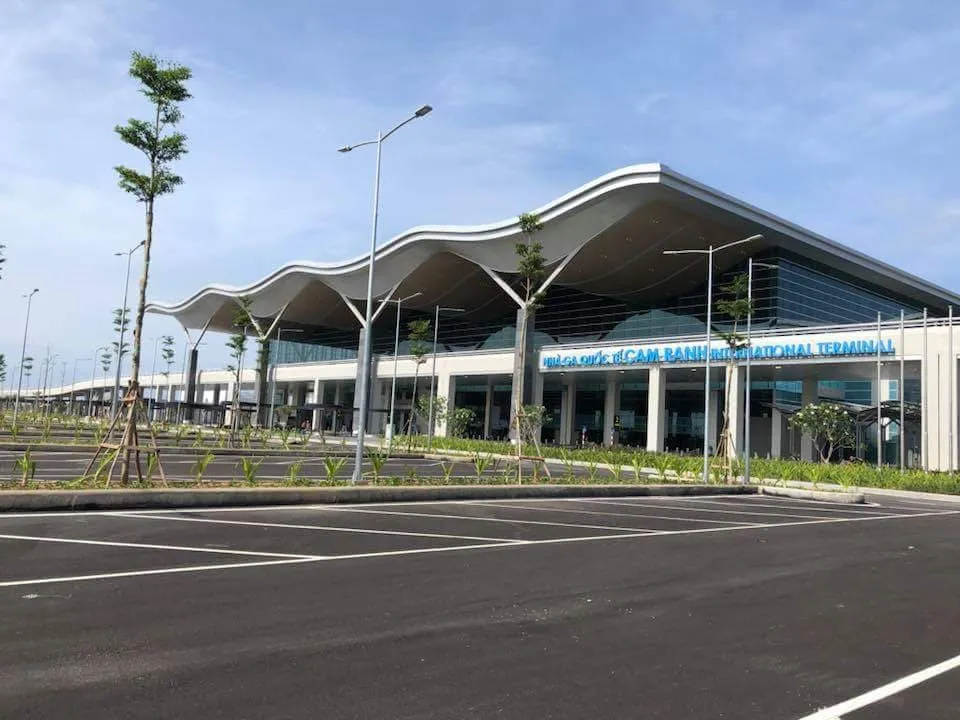
ACV, the airport operator, lists Cam Ranh as an international airport in Bac Cam Ranh Ward, Khanh Hoa Province. Its arrival page, posted in 2018, starts with leaving the aircraft and entering the terminal by bus or jet bridge. Step 2 is to have your baggage claim tag ready at the arrival-hall carousel.

Nguyen Tat Thanh, Bac Cam Ranh, Khanh Hoa, Vietnam · Open in Google Maps (opens in a new tab)
Open Cam Ranh Airport in Google Maps (opens in a new tab)
For the full arrival sequence, see Cam Ranh Airport arrival: e-visa, exemption and passport rules. To reach the city, see Cam Ranh Airport to Nha Trang.
The exemption certificate for overseas Vietnamese
Holders of a visa exemption certificate, issued to overseas Vietnamese and their relatives, get a temporary residence certificate of 6 months for each entry. The certificate runs for the remaining validity of the exemption certificate if that is less than 6 months.
A holder who wants to stay longer needs a sponsor in Vietnam and a valid reason. An extension of no more than 6 months can then be considered.
When your exempt stay runs out in Nha Trang
If you entered under either 45-day resolution, the law lets the authorities consider a visa or an extension of stay. Your inviting or sponsoring organisation or individual files the request, not you. You must still be in Vietnam.
A Vietnamese individual sponsor must be your grandparent, parent, spouse, child or sibling, with papers proving the relationship. The government fee is US$10. The statutory processing time is up to 5 working days from a complete application. The full fee schedule covers every other visa and card.
In Khanh Hoa, the Immigration Management Division carries out the extension procedure. A separate line on its service list covers extending temporary stay for people issued a visa-exemption certificate. The division’s notice of 27 June 2025 gives its address as 47 Ly Tu Trong, Loc Tho, Nha Trang. Loc Tho is one of the old wards merged into Nha Trang Ward.
Applications are received Monday to Saturday morning, except Tet and public holidays, and results are returned Monday to Friday. You can file in person during office hours on working days.
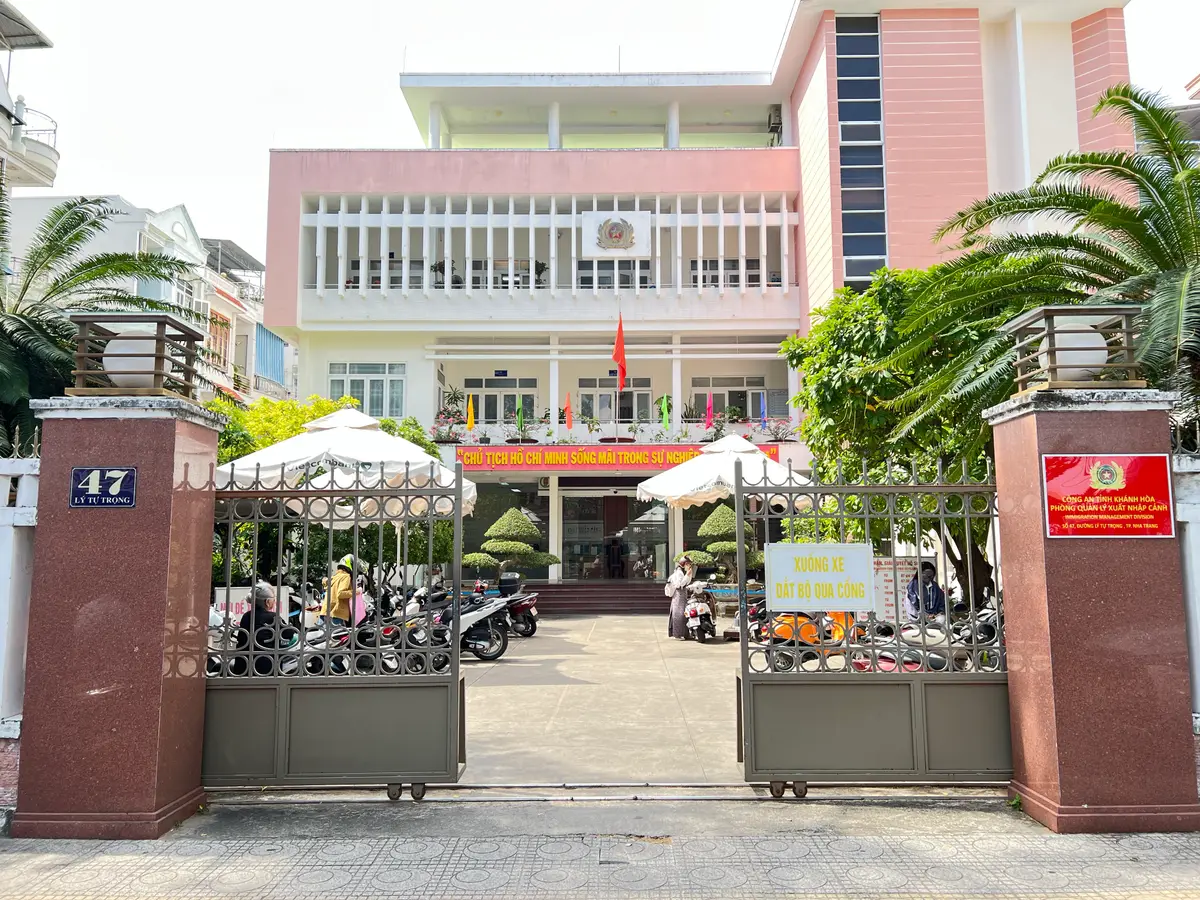
47 Ly Tu Trong, Nha Trang, Khanh Hoa 650000, Vietnam · Open in Google Maps (opens in a new tab)
Open the immigration office in Google Maps (opens in a new tab)
An overstay of under 16 days is fined VND 500,000 to 2,000,000. An overstay of 1 year or more is fined VND 30,000,000 to 40,000,000. An overstay of 16 days or more can also bring deportation, decided on the nature and severity of the violation. See overstay fines in Nha Trang by days overstayed for the bands in between.
For the office address, hours and procedures, see the Nha Trang immigration office guide. Thinking of leaving and re-entering instead? See visa runs from Nha Trang. For a longer stay, see the temporary residence card guide, the list of visa types and symbols, and the visa hub.
Photos and clips uploaded to Google Maps (Cam Ranh International Airport on Google Maps (opens in a new tab), Khanh Hoa immigration office on Google Maps (opens in a new tab)) by @Michael Hoang, @Evgenii Lukashevich.
Not confirmed: Whether Indonesia's 30-day exemption has been removed or shortened: ask a Vietnamese embassy before you fly. The start date and stay length of the Timor-Leste agreement. The immigration office address comes from a notice of 27 June 2025: check it before you go.
Common questions
Do I need a visa for Nha Trang if my country is on neither resolution list?
Check the bilateral deals first: Cambodia, Laos, Thailand and Singapore have their own 30-day exemptions. If your passport is on no list, apply for an e-visa, which costs US$25 for a single entry.
Can I extend a visa-free stay in Nha Trang?
Through a sponsor: the inviting organisation or individual files the request with the immigration authority. In Khanh Hoa the Immigration Management Division carries out the extension procedure. The Indonesian agreement says the stay cannot be extended.
Do I have to wait before entering visa-free again?
The 2014 law made unilateral-exemption entrants wait 30 days after their last exit. Law 51/2019/QH14 replaced that article and kept only the 6-month passport rule, with no waiting period. Some bilateral deals cap the total instead, such as Belarus at 90 days per calendar year.
What happens if I overstay a visa-free stay?
An overstay of under 16 days is fined VND 500,000 to 2,000,000. An overstay of 16 days or more can also bring deportation.
Does the Phu Quoc exemption apply if I land at Cam Ranh?
No. The Phu Quoc rule covers foreigners entering, leaving or staying on Phu Quoc island. For Nha Trang you need an exemption for your nationality, an e-visa or a visa.
Is Cam Ranh an international airport?
ACV lists Cam Ranh as an international airport, in Bac Cam Ranh Ward, Khanh Hoa Province.
How long can I stay on the exemption certificate for overseas Vietnamese?
Each entry gives a temporary residence certificate of 6 months, or less if the certificate itself has less than 6 months left. Staying longer needs a sponsor in Vietnam and a valid reason.
Read next
Places in this guide

General information checked against the sources listed above, not legal advice for your situation. Rules and office practice change; confirm with the immigration office or a licensed adviser before you act. See how guides are checked.
Spotted an error? Report it.