Work Permit in Nha Trang: Who Needs One, Exemptions, Steps
A manager, executive, expert or technical worker in Vietnam under 90 days in a calendar year is exempt. So is a foreigner married to a Vietnamese citizen and living in Vietnam. Anyone not exempt needs a work permit. Your employer files 10 to 60 days before you start, and the decision takes 10 working days.
On this page
- Which case are you?
- Who is exempt from a work permit
- Certificate or notice: what the employer files for an exemption
- What the employer files for a work permit
- Which Khanh Hoa agency handles it
- Validity and renewal
- Fines for working without a permit
- Which visa matches your work status
- After the permit: your visa and residence card
- Step by step
- Common questions
Người lao động nước ngoài làm việc tại Việt Nam là người có quốc tịch nước ngoài và phải đáp ứng các điều kiện sau đây: … d) Có giấy phép lao động do cơ quan nhà nước có thẩm quyền của Việt Nam cấp, trừ trường hợp quy định tại Điều 154 của Bộ luật này.
A foreign worker in Vietnam must hold a work permit issued by the competent Vietnamese state agency, except in the cases in Article 154 of the Code. Labor Code 45/2019/QH14, Điều 151 khoản 1 điểm d
Start with two questions. Does your case match an exemption in the Labor Code or Decree 219/2025/NĐ-CP? And if so, does it need a certificate or only a notice? If no exemption applies, you need a permit.
Which case are you?
- Married to a Vietnamese citizen and living in Vietnam, or a licensed foreign lawyer: no permit and no certificate. Your employer notifies the competent agency at least 3 working days before you start.
- LLC owner or member, or joint-stock board chair or member, with VND 3 billion or more: no permit and no certificate. The same 3-working-day notice applies.
- Manager, executive, expert or technical worker, under 90 days in total in a calendar year: exempt, with the same notice.
- Moved within a foreign company with a commercial presence in Vietnam: exempt from the permit, but you need a certificate. The company must be in one of 11 WTO-committed service sectors, and you must have worked for it for at least 12 continuous months. Your employer files 10 to 60 days before you start.
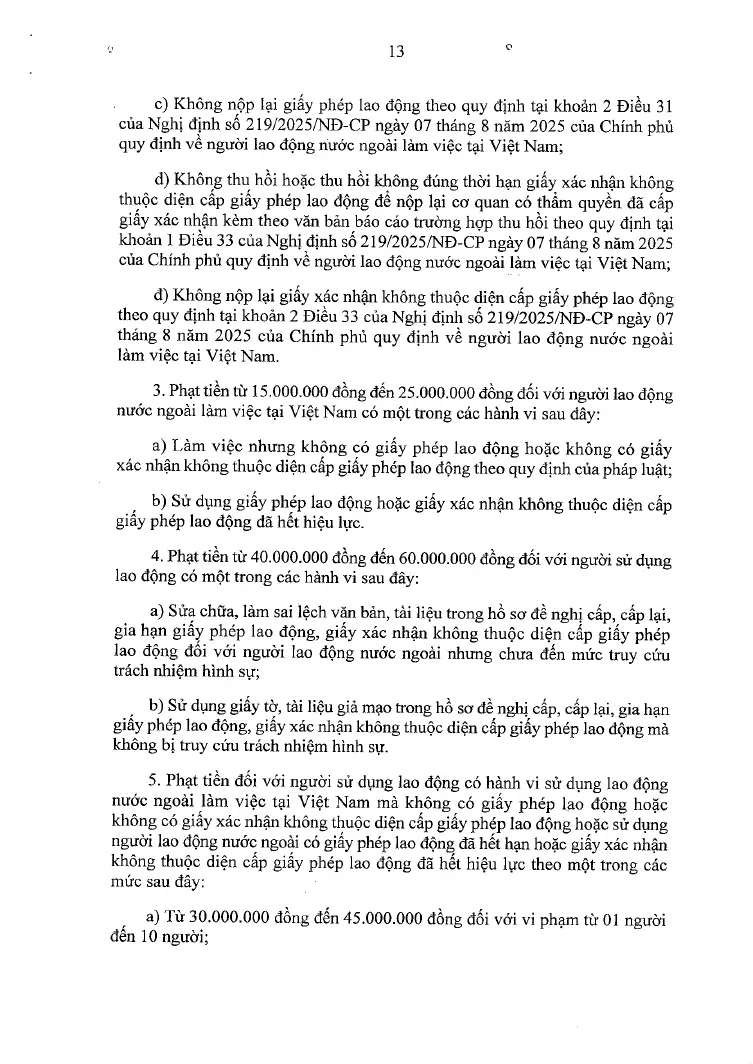
- No exemption fits: you need a work permit. Your employer files 10 to 60 days before your start date, and the agency decides within 10 working days of a complete dossier.
- You start before the permit or certificate exists: you face a fine of VND 15,000,000 to 25,000,000, and deportation is a possible additional penalty.

Who is exempt from a work permit
The Labor Code itself exempts these categories.
- An LLC owner or capital-contributing member whose contribution is VND 3 billion or more.
- A joint-stock board chair or board member whose contribution is VND 3 billion or more.
- The head of a representative office or project, or the person mainly responsible for its activities, of an international organisation or foreign NGO in Vietnam.
- Someone entering Vietnam for under 3 months to offer a service for sale.
- Someone entering for under 3 months to fix a complex technical incident that experts already in Vietnam cannot solve.
- A foreign lawyer licensed to practise in Vietnam under the Law on Lawyers.
- A case covered by an international treaty Vietnam has joined.
- A foreigner married to a Vietnamese citizen and living in Vietnam.
- High-quality digital-technology-industry workforce, since 1 January 2026. Ask the Department of Home Affairs which procedure applies.
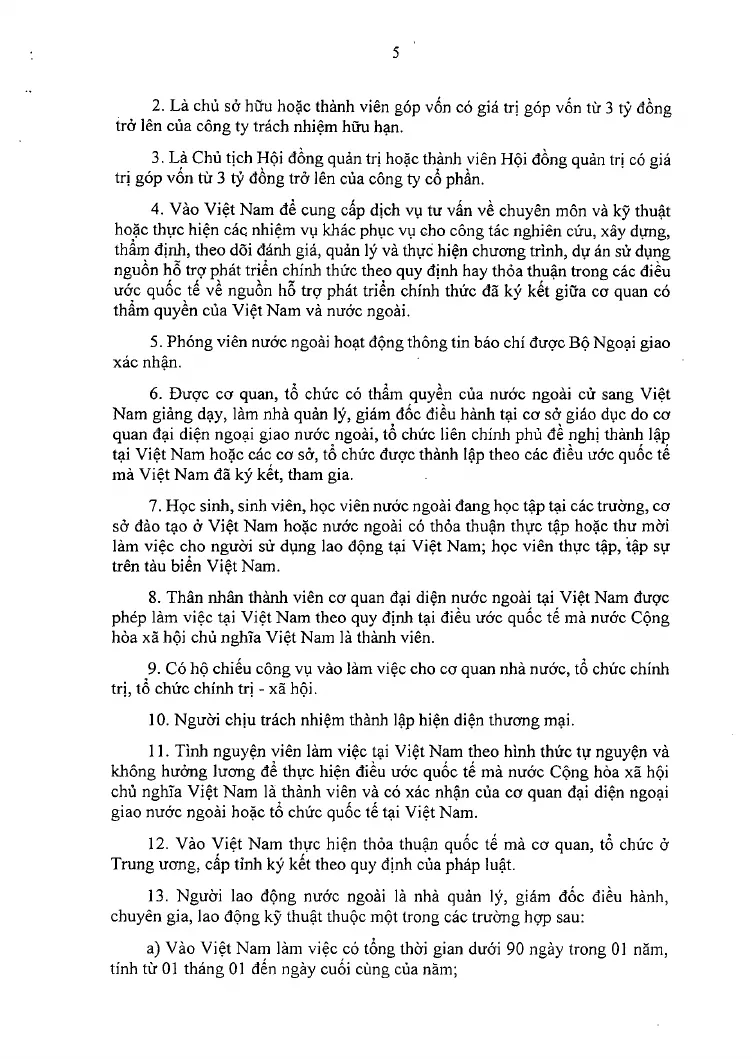
The Labor Code lets the Government add cases. Decree 219/2025/NĐ-CP adds, among others, these.
- Consultants or other staff on an official-development-assistance (ODA) programme or project.
- A foreign journalist confirmed by the Ministry of Foreign Affairs.
- Staff sent by a competent foreign authority to teach or manage at an education institution set up under a treaty or proposed by a foreign diplomatic mission.
- A foreign student or trainee with an internship agreement or job offer letter from an employer in Vietnam, or an apprentice on a Vietnamese-flagged ship.
- A family member of foreign-mission staff, permitted to work under a treaty.
- Someone holding an official passport and working for a state or political organisation.
- The person responsible for setting up a commercial presence.
- An unpaid treaty volunteer confirmed by a foreign mission or international organisation in Vietnam.
- Someone carrying out an international agreement signed by a central or provincial Vietnamese agency.
- A manager, executive, expert or technical worker in Vietnam for under 90 days in total in a calendar year.
- An intra-corporate transferee of a foreign company with a commercial presence in Vietnam.
- Someone confirmed by the Ministry of Education and Training to teach, research or transfer an international curriculum, or to manage a school proposed by a foreign mission.
- Someone confirmed by a ministry or provincial People’s Committee to work in a priority field such as finance, science or national digital transformation.
The 90-day and intra-corporate exemptions apply to managers, executives, experts and technical workers. An expert has a university degree or equivalent and at least 2 years of relevant experience. A technical worker has at least 1 year of training and 2 years of relevant experience, or at least 3 years of relevant experience.
Certificate or notice: what the employer files for an exemption
Being exempt does not always end the paperwork. Some exempt categories need only a notice, covered below. The others use a confirmation of exemption certificate.
The certificate’s Vietnamese name is “giấy xác nhận không thuộc diện cấp giấy phép lao động”. Your employer files at the Public Administrative Service Center where you will work, at least 10 and no more than 60 days before your start date.
The agency has 5 working days from a complete dossier to issue it. A refusal comes in writing, with reasons, within 3 working days. The certificate is valid for the same term as a matching work permit, up to 2 years.
The notice-only group covers marriage to a Vietnamese citizen and licensed foreign lawyers. It covers entry for under 3 months to offer a service or fix a technical incident.
It also covers LLC and joint-stock owners and board members with VND 3 billion or more. Confirmed journalists, family members of mission staff and people setting up a commercial presence are in it too. So are managers, executives, experts and technical workers under 90 days in a year.
For these workers, the employer notifies the competent agency where you will work at least 3 working days before you start. A missing, late or incomplete notice costs the employer VND 1,000,000 to 3,000,000, or double for a company.
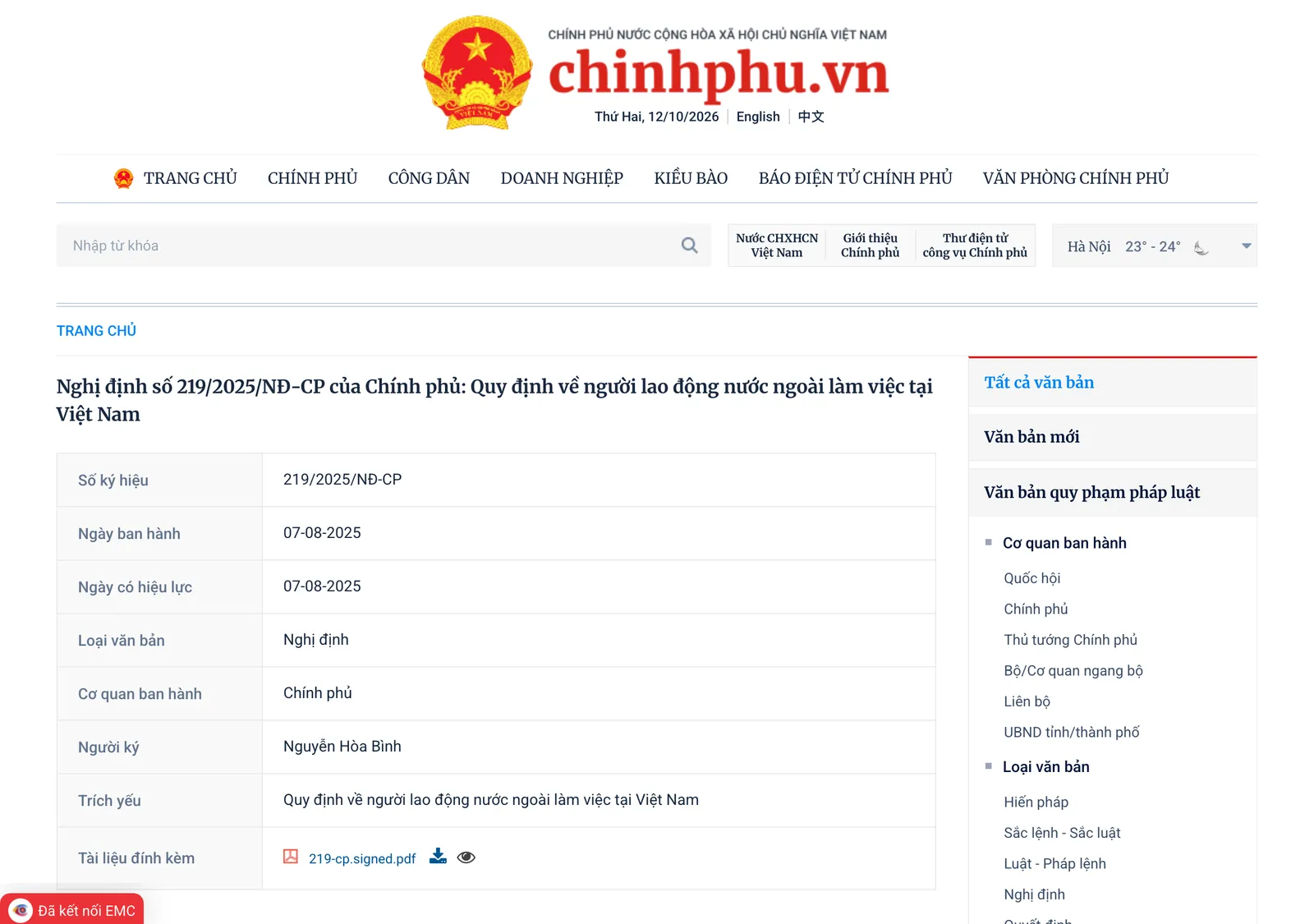
Decree 219/2025/NĐ-CP has been in force since 7 August 2025. It replaces the foreign-worker rules of Decree 152/2020/NĐ-CP as amended by Decree 70/2023/NĐ-CP, which ceased to apply the same day.
What the employer files for a work permit
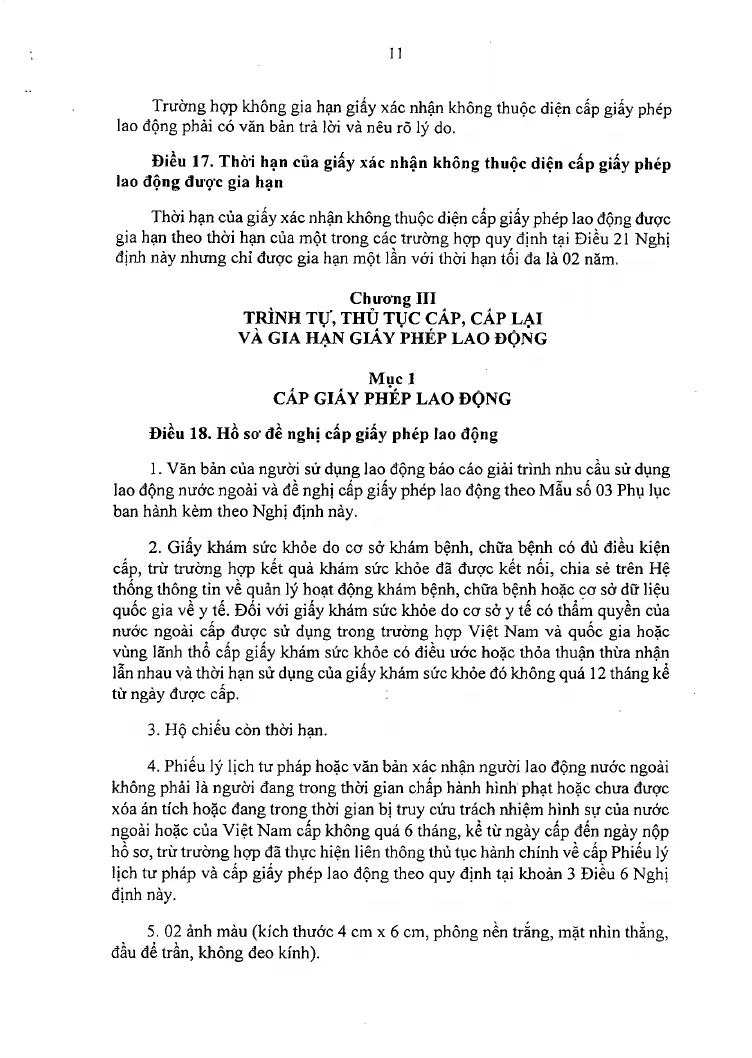
If no exemption fits, the dossier opens with your employer’s report on why it needs a foreign worker, and its request for the permit, on the decree’s official form. It also holds a health certificate from a qualified medical facility, a valid passport and two colour photos.
A foreign health certificate is accepted where Vietnam and the issuing country or territory recognise each other’s certificates, and it must be no more than 12 months old. The dossier needs a judicial record, or a certification that you are not serving a criminal sentence, have no unspent conviction and are not under criminal investigation. It must be issued no more than 6 months before filing.
The dossier lists documents proving you are a manager, executive, expert or technical worker, set out in Article 19 of the decree. Foreign-issued papers need consular legalisation unless a treaty, reciprocity or the law exempts them, and the legalised papers need a certified Vietnamese translation.
Your employer files the full dossier at the Public Administrative Service Center, 10 to 60 days before you start. It can file in person, by public postal service, or through a hired service provider or authorised representative. The competent agency then has 10 working days from a complete dossier to issue the permit, or 3 working days to refuse in writing.
If your start date is fixed, file nearer 60 days before it, because the 10 working days run only from a complete dossier.
Which Khanh Hoa agency handles it
The provincial-level People’s Committee has the authority to grant, re-grant, renew and revoke work permits and certificates. That covers workers whose employer has a head office, branch, representative office or business location in the province where they will work. A province may delegate the authority to another competent agency.
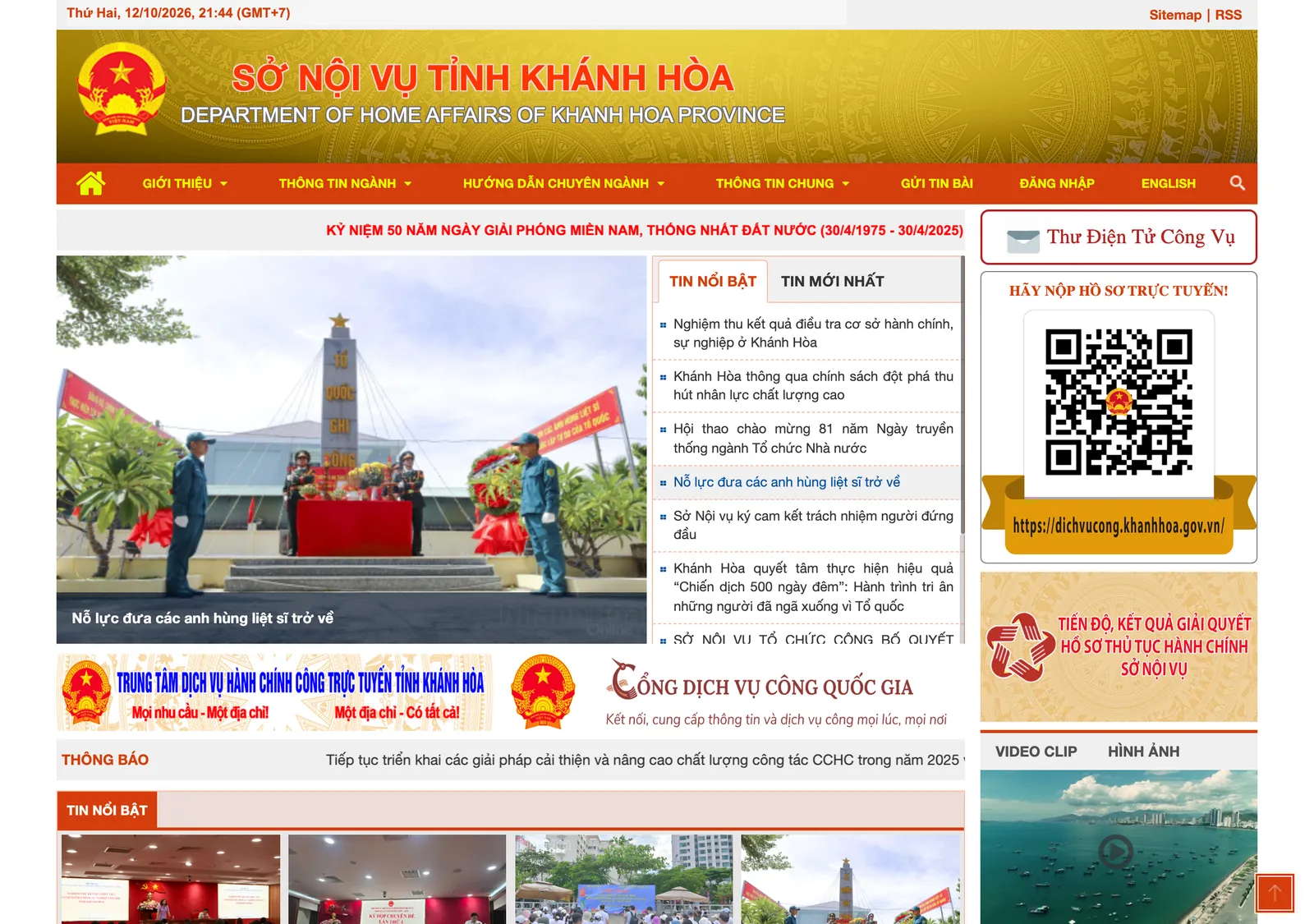
In Khanh Hoa, the Department of Home Affairs (Sở Nội vụ) stands where the Department of Labour, Invalids and Social Affairs stood under the earlier decrees. In a draft of October 2025, it proposed that the People’s Committee delegate to it the issue, re-issue, renewal and revocation of permits and certificates for foreign workers.
The Department’s website gives its address as 05 Pasteur, Nha Trang. For re-issuing a permit or certificate, the draft cites 3 working days.
The same draft lists what the office handles. Khanh Hoa issued 120 work permits in 2021, and 655 permits and 78 exemption confirmations in 2024. From 1 January to 31 July 2025 it issued 541 permits and 48 confirmations.
Your employer files at the Public Administrative Service Center in the area where you will work. Which counter in Khanh Hoa takes the file is in the Not confirmed box above.
Validity and renewal
A work permit is valid for the term of one of the documents the decree lists, capped at 2 years. The list includes the intended labor contract, a document from the foreign party that sends you to work in Vietnam, and a service contract.
A permit based on a short contract is valid for that shorter term. To renew, your employer files at least 10 and no more than 45 days before the permit expires. The agency then has 10 working days from a complete dossier to renew it, or to refuse in writing with reasons. A permit can be renewed only once, for up to 2 more years.
Your contract end date caps the permit term, so the permit follows the contract and not the other way round.
Fines for working without a permit
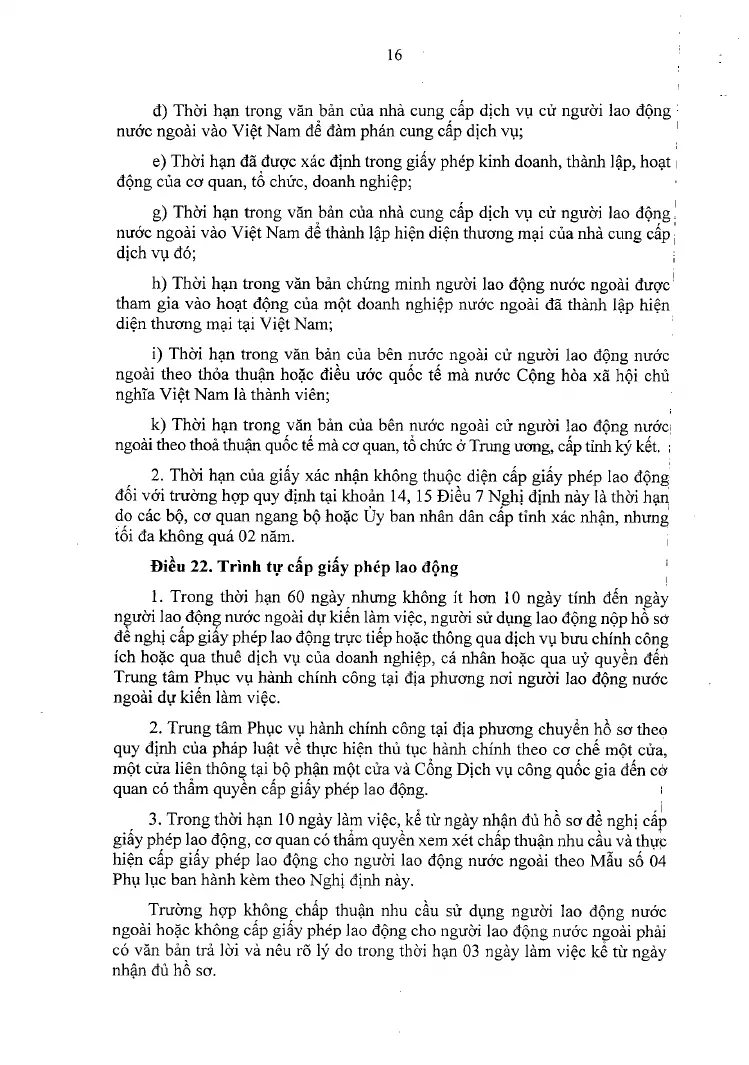
The fines fall on both sides. A foreign worker who works without a permit or certificate, or with an expired one, is fined VND 15,000,000 to 25,000,000. Deportation is a possible additional penalty.
Decree 283/2026/NĐ-CP states its fines for an individual, and an organisation pays double. It has been in force since 10 September 2026 and replaces the fine schedule of Decree 12/2022/NĐ-CP.
An employer that alters or falsifies dossier documents, or uses forged ones, is fined VND 40,000,000 to 60,000,000 where the act is not prosecuted as a crime. An employer that uses a foreign worker without a permit or certificate, or with an expired one, is fined by headcount.
- VND 30,000,000 to 45,000,000 for 1 to 10 workers.
- VND 45,000,000 to 60,000,000 for 11 to 20 workers.
- VND 60,000,000 to 75,000,000 for 21 or more workers.
A fined person pays within 10 days of receiving the decision, unless the decision states a longer deadline. A foreigner with an unpaid fine can be temporarily barred from leaving Vietnam, for no more than 3 years. Deportation also carries a re-entry ban of 3 years from the date the decision took effect.
Which visa matches your work status
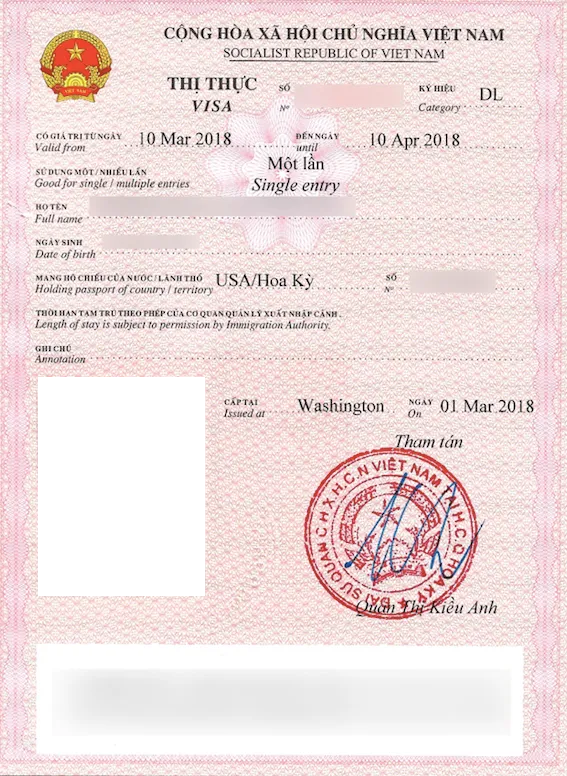
The work permit and the visa are separate documents, but the visa symbol follows your status. An LĐ1 visa goes to a foreigner working in Vietnam who is confirmed as not subject to the work-permit requirement. An LĐ2 visa goes to a foreigner who is subject to it. Both are valid for a maximum of 2 years.
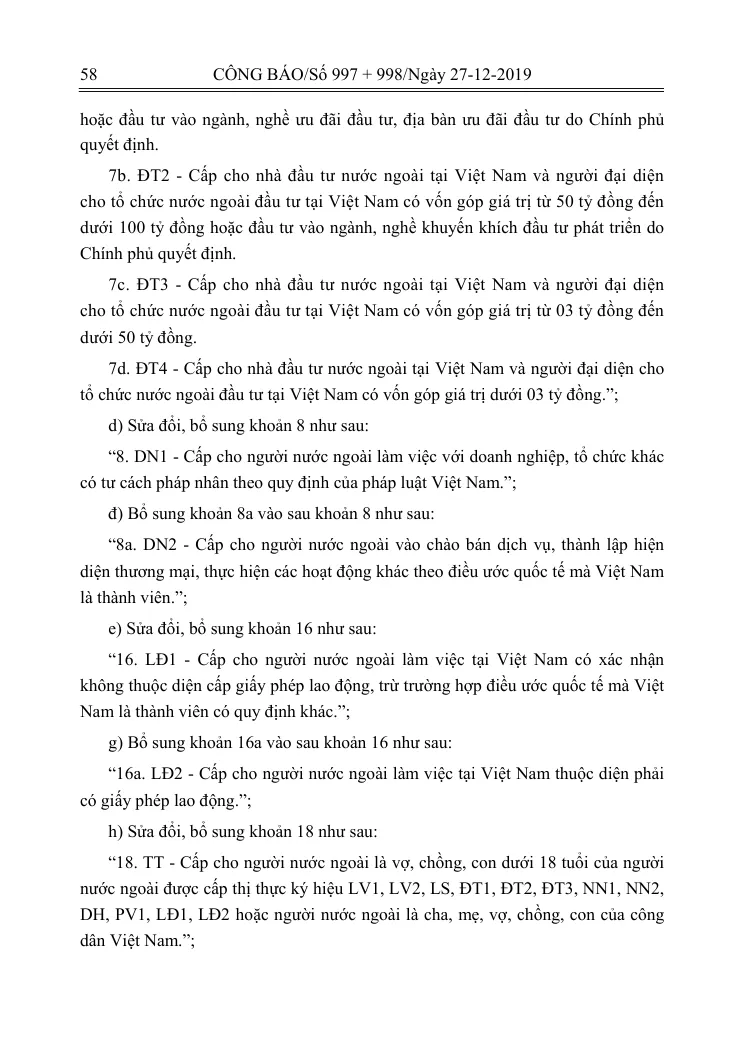
Two other symbols matter to people who run a business. A DN1 visa goes to a foreigner who works with an enterprise or organisation that has legal-entity status under Vietnamese law. A DN2 visa goes to a foreigner who comes to offer services or set up a commercial presence under an international treaty. Both are valid for a maximum of 1 year.
An investor holds a different visa. A foreign investor whose contributed capital is VND 3 billion to under 50 billion gets a ĐT3 visa. An investor with under VND 3 billion gets ĐT4. That VND 3 billion line matches the work-permit exemption for LLC owners and board members.
A visa cannot change purpose except in the cases the law lists, and a new visa then carries the symbol and validity of the new purpose. Do not assume a tourist visa converts into a work visa.
After the permit: your visa and residence card
People staying in Vietnam on an LĐ1 or LĐ2 visa are on the law’s list for a temporary residence card. See temporary residence card in Nha Trang for validity and application, and Vietnam visa types for every symbol.
Working on a tourist visa is a separate question, covered in remote work on a tourist visa. For the fee schedule, see Vietnam immigration fees.
Step by step
- Check whether you are exemptCompare your case with the exemptions in the Labor Code and Decree 219/2025/NĐ-CP. Some categories need only a notice.
- Have your employer file for an exemption certificate, if one appliesYour employer files at the Public Administrative Service Center 10 to 60 days before you start. The agency decides within 5 working days of a complete dossier.
- If you are not exempt, assemble the permit dossierThe dossier holds your employer's report and request on the official form, a health certificate, a valid passport and two colour photos. It also holds a judicial record issued no more than 6 months before filing.
- Have your employer file the dossierIt goes to the Public Administrative Service Center where you will work, 10 to 60 days before your start date.
- Wait for the decisionThe competent agency has 10 working days from a complete dossier to issue the permit.
- Renew before it expiresYour employer files 10 to 45 days before expiry. A permit can be renewed once, for up to 2 more years.
Not confirmed: Whether the Khanh Hoa People's Committee has signed the delegation to the Department of Home Affairs is not confirmed. Neither is which counter takes the file or what fee applies. Ask the Department of Home Affairs at 05 Pasteur Street before your employer files.
Common questions
Do you need a work permit to work in Nha Trang?
Yes, unless an exemption in the Labor Code or Decree 219/2025/NĐ-CP applies.
Who is exempt from a Vietnam work permit?
Exempt cases include a licensed foreign lawyer, a foreigner married to a Vietnamese citizen and living in Vietnam, and a case covered by an international treaty. LLC owners and members, and joint-stock board chairs and members, are exempt when their capital contribution is VND 3 billion or more.
Does every exempt category skip the paperwork?
No. Some categories need only a notice from the employer at least 3 working days before work starts. The others follow the certificate procedure.
Who files the application, you or your employer?
Your employer files at the Public Administrative Service Center where you will work, at least 10 and no more than 60 days before your start date.
How long does a work permit last, and can it be renewed?
A permit is valid for up to 2 years, following the term of the underlying document such as the labor contract. It can be renewed only once, for up to 2 more years.
What happens if you work without a permit?
You face a fine of VND 15,000,000 to 25,000,000, and deportation is a possible additional penalty. Your employer is fined VND 30,000,000 to 75,000,000, depending on the number of workers. A company pays double.
Which Khanh Hoa agency handles work permits?
The provincial People's Committee holds the authority and may delegate it. The Khanh Hoa Department of Home Affairs proposed in a draft of October 2025 to take it over. Its address is 05 Pasteur Street, Nha Trang.
How many work permits does Khanh Hoa issue?
The Department of Home Affairs' draft lists 655 work permits and 78 exemption confirmations issued in 2024.
Read next
General information checked against the sources listed above, not legal advice for your situation. Rules and office practice change; confirm with the immigration office or a licensed adviser before you act. See how guides are checked.
Spotted an error? Report it.