Police Check and Criminal Record Certificate in Nha Trang
A foreigner living in Nha Trang asks the Khanh Hoa provincial police for the judicial record certificate. Filing is at the Public Administration Service Center, 26 Hoang Hoa Tham, or by post or online. The fee is VND 200,000 per time. The law sets 5 working days, or up to 15 where verification is needed.
On this page
- Which case are you?
- Who issues it now: the police
- Who can ask, and which certificate to choose
- How to apply in Nha Trang
- Where the filing counter is
- Fee and deadline
- When an employer or another country asks for it
- Is a police visit to your home normal?
- A real fine, or a cash demand?
- Your landlord’s residence declaration
- If you have overstayed
- Read next
- Step by step
- Common questions
A foreigner living in Nha Trang does not go to the Department of Justice for this certificate any more. The Khanh Hoa provincial police handle the procedure for foreigners currently residing locally. The same page also covers Vietnamese citizens.
Two things get called a police check. One is the criminal record certificate, a document you request. The other is an officer checking your passport and residence papers at your door. This guide covers both.
Which case are you?
- You live in Nha Trang now and need the certificate: file with the Khanh Hoa provincial police. The unit that carries out the procedure is the Professional Records Division.
- You have left Vietnam: you file with the Ministry of Public Security’s competent issuing agency, not the provincial one.
- Your employer asks for it for a work permit: the dossier needs a judicial record or a certification. See the work permit guide for Nha Trang.
- You need it in another country: the certificate is consularly legalised by the Ministry of Foreign Affairs.
- An officer asks for your papers at home: carry your passport and residence papers. The last sections cover fines and your landlord’s declaration.
Who issues it now: the police
Under the original 2009 Law on Judicial Records, the provincial Department of Justice issued the certificate to a foreigner currently residing in Vietnam. The National Judicial Records Centre issued it to a foreigner who had resided in Vietnam.
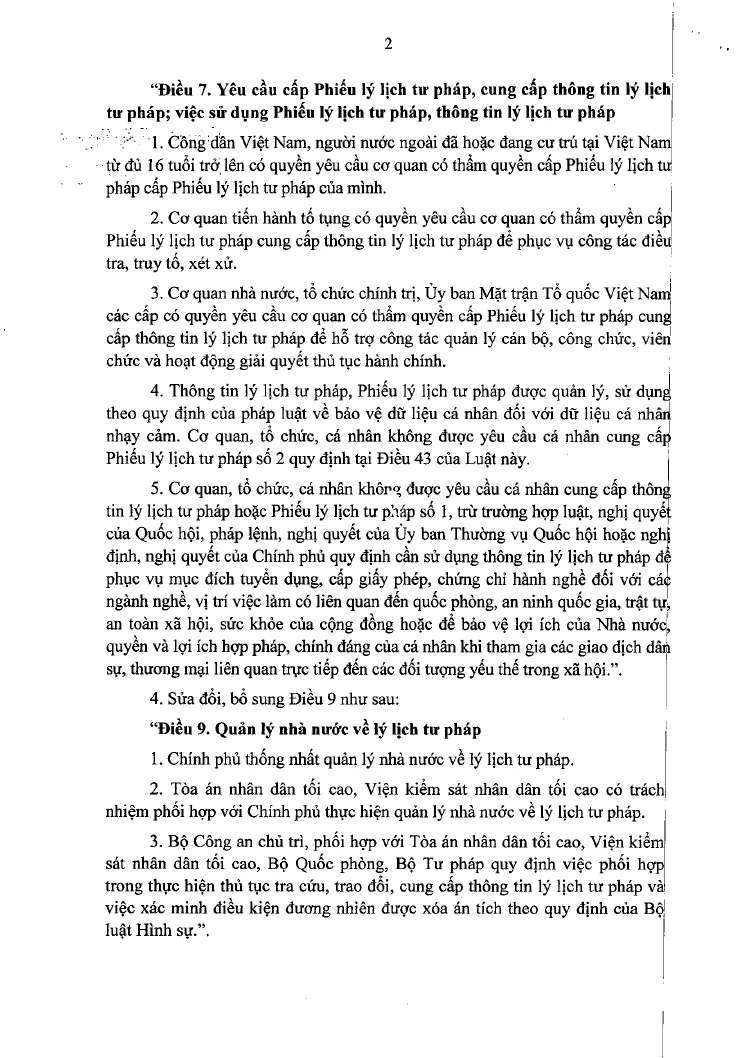
The picture changed in 2025. A Ministry of Public Security decision of 25 February 2025 announced the new procedures, including issuing judicial record certificates, as falling under the ministry’s authority. On the ministry’s portal the procedure is code 3.000333, handled by provincial police.
In Khanh Hoa, the provincial police procedure covers Vietnamese citizens and foreigners residing in Vietnam. The unit that carries it out is the Professional Records Division.
Decree 216/2026/NĐ-CP gives detailed rules for the Law on Judicial Records. A foreigner currently residing in Vietnam files with the competent issuing agency at the place of residence. A foreigner who has left Vietnam files with the Ministry of Public Security’s agency.
Who can ask, and which certificate to choose
The amended law sets who has the right to ask. It took effect on 1 July 2026.
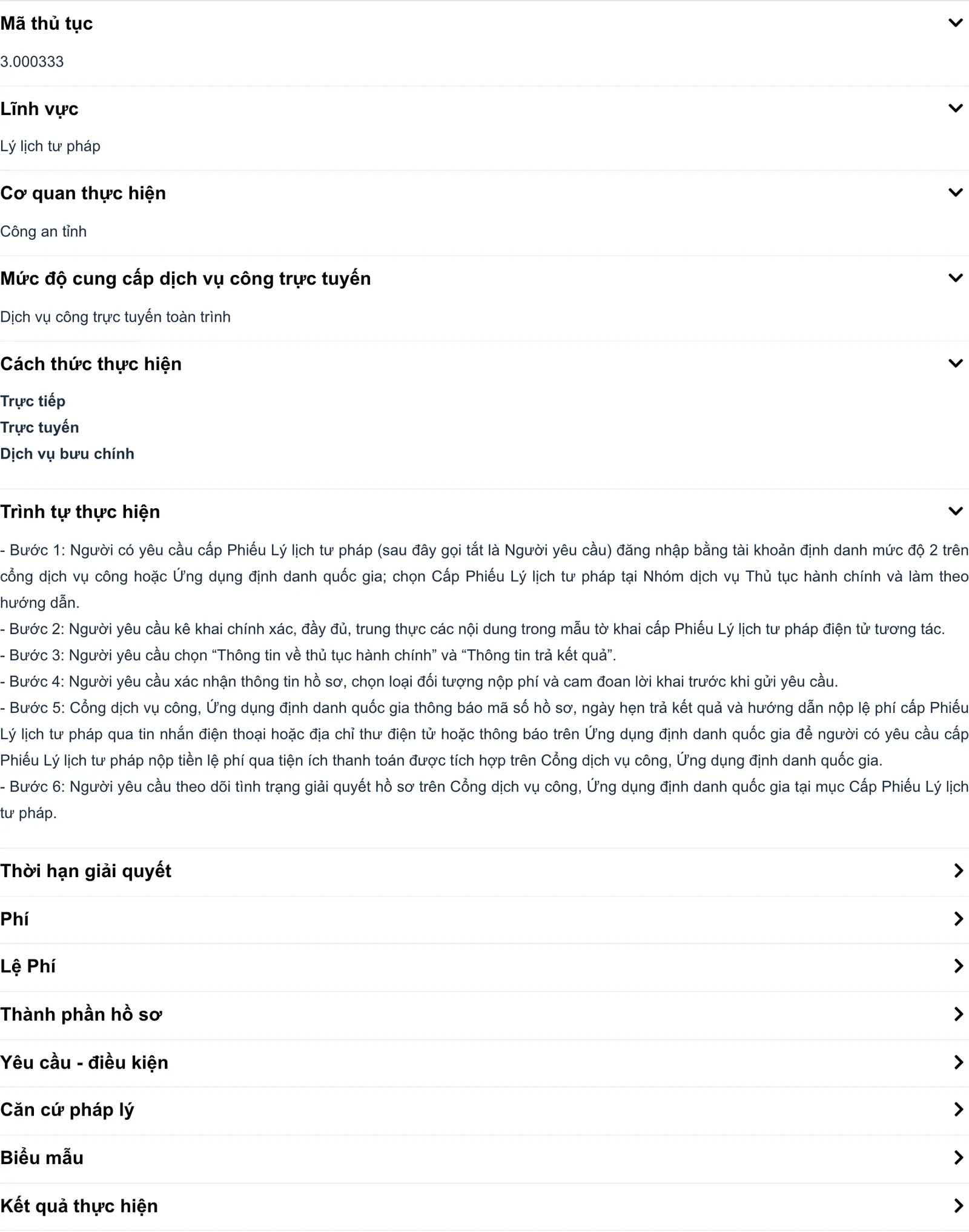
Công dân Việt Nam, người nước ngoài đã hoặc đang cư trú tại Việt Nam từ đủ 16 tuổi trở lên có quyền yêu cầu cơ quan có thẩm quyền cấp Phiếu lý lịch tư pháp cấp Phiếu lý lịch tư pháp của mình
Vietnamese citizens and foreigners who have resided or are residing in Vietnam, from the age of 16, have the right to ask the competent agency to issue their own judicial record certificate. Law 107/2025/QH15, Điều 7, as quoted by the Director of the Criminal Records Department
The law keeps two certificates, No. 1 and No. 2. The Khanh Hoa procedure issues either one. Under the original 2009 text, No. 2 is issued on the individual’s request so the person can know their own judicial record.
The difference is in what the certificate lists. Under the original text, a person whose conviction was expunged, with the expungement recorded, is shown on No. 1 as having no criminal record. No. 2 lists expunged convictions in full, with the date of expungement, and convictions not yet expunged.
A certificate is issued in electronic or paper form, and both have the same legal value. Each one carries a unique QR code for checking it.
Which certificate to ask for
If an employer or agency asks you for a judicial record, ask which number it wants. Nobody may ask an individual to provide Certificate No. 2. For No. 1, a law or decree has to require it for the purpose.
So No. 1 is the usual request from an agency or employer, in the cases a law, resolution or decree lists. Ask for No. 2 only if you want to see your own record in full.
Who may demand which certificate
Agencies, organisations and individuals may not ask an individual to provide Certificate No. 2. For No. 1 the same ban applies, with exceptions. A law, a National Assembly resolution, an ordinance, a Standing Committee resolution or a Government decree or resolution may require judicial record information for recruitment, licences or practising certificates.
How to apply in Nha Trang
The law makes online filing the default for an individual with an electronic identity. Foreigners and people without an electronic identity may request a certificate in person or through postal service. Pick the route first.
Online
- Log in with a level-2 identification account on the public service portal or the national identification app, and choose the judicial record service.
- Fill in the interactive electronic declaration accurately, fully and truthfully.
- The portal or app announces a file number and an appointment date, and shows how to pay the fee.
- Follow the file on the portal or the app under the judicial record section.
The declaration for online filing is the interactive electronic form, form 04 of the 2025 series. Decree 216/2026/NĐ-CP also has an individual fill in the electronic declaration on the national identification app or the national public service portal.
At the counter
Go to the Khanh Hoa Public Administration Service Center, 26 Hoang Hoa Tham, Nha Trang. The paper declaration is form 01 of the 2025 series. Under the law, an individual who files in person receives a paper certificate.
Decree 216/2026/NĐ-CP says to file in person with the competent issuing agency at the place of residence, or the nearest one. Each request is one file for each type of certificate.

By post
A request by post goes with a certification of the requester’s signature under the law. A foreigner currently residing in Vietnam sends the file to the issuing agency at the place of residence. The Khanh Hoa procedure also lists postal filing.
What to bring
- A declaration, electronic or on paper.
- A copy of your passport, Citizen Identity Card or Identity Card, with the original shown for checking. The copy is not needed when you file online with a level-2 account.
- Papers proving your residence period in Vietnam, if you file as a foreigner currently residing in Vietnam with a passport.
- Papers proving a reduced fee, if you claim one.
If someone files for you
A person who requests a certificate for their parent, spouse, child or ward needs no power of attorney. For Certificate No. 2 you may not authorise another person, except that a minor may authorise a parent or guardian.
A power of attorney made under the law of your country must be consularly legalised under Vietnamese law and translated into Vietnamese.
Where the filing counter is
The in-person counter in Khanh Hoa is the Public Administration Service Center, 26 Hoang Hoa Tham, Nha Trang Ward. Google Maps shows the centre open Monday to Friday 7 AM to 5 PM and Saturday 7 to 11 AM, closed Sunday.
Those hours come from a map listing, not from the centre’s own notice. Confirm them before you go, and ask whether the judicial record counter keeps different hours.
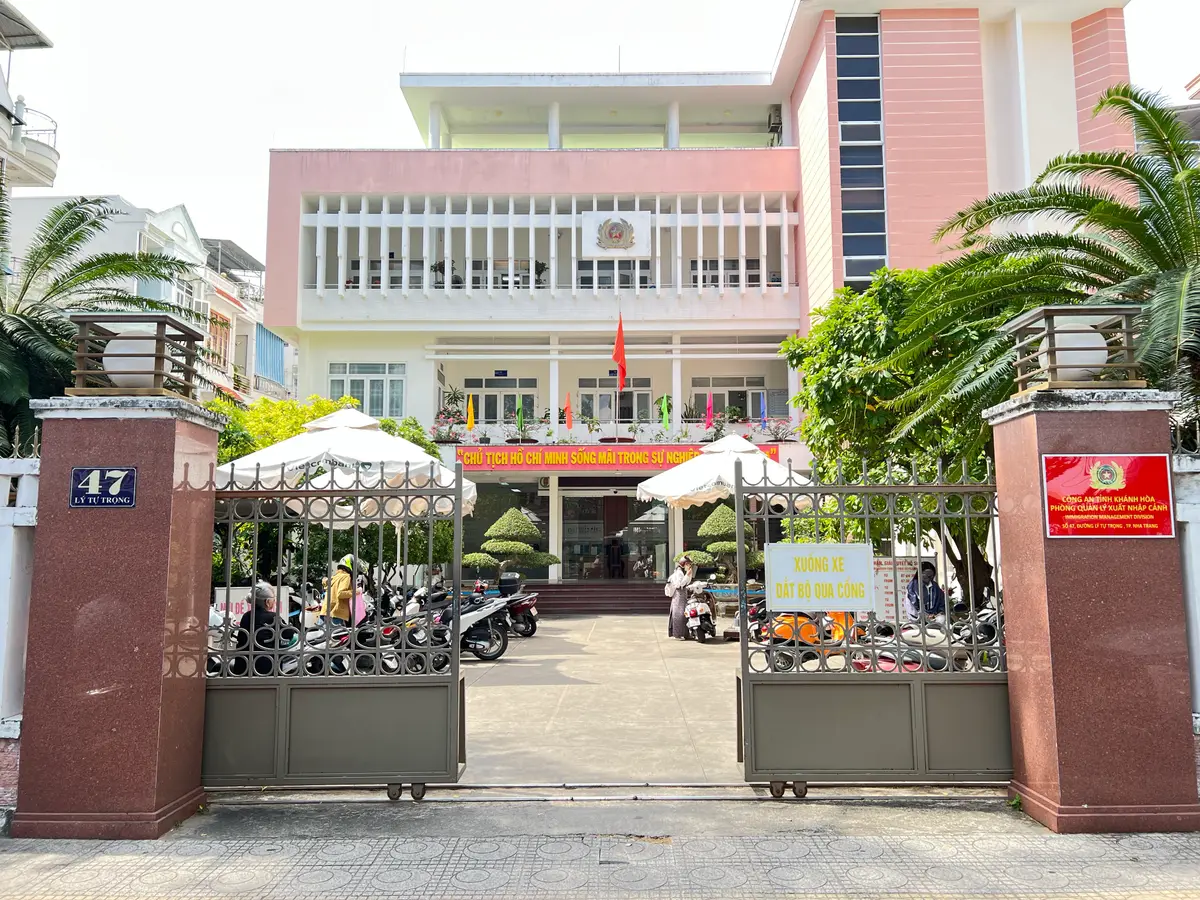
Do not mix it up with the immigration office. The Khanh Hoa immigration division, for visas and stay extensions, is at 47 Ly Tu Trong. See the Nha Trang immigration office guide.

26 D. Hoang Hoa Tham, Nha Trang, Khanh Hoa · Open in Google Maps (opens in a new tab)
Fee and deadline
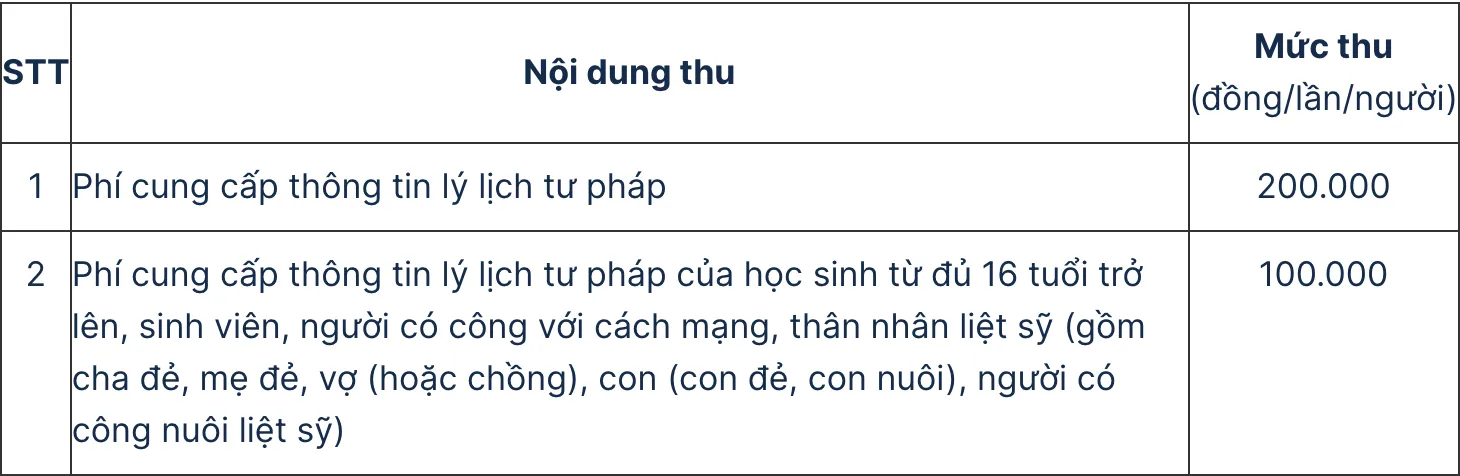
Circular 16/2025/TT-BTC sets the fee for Vietnamese citizens and foreigners who request a certificate. From 1 January 2026 it is VND 200,000 per time per person, and VND 100,000 for the reduced group.
The Khanh Hoa page lists VND 200,000 per time per person. It lists VND 100,000 for students, people with merit to the revolution and relatives of martyrs, who must show papers proving it. Ask the counter whether a foreign student qualifies.
When more than 2 certificates are requested in one request, the issuing agency charges VND 5,000 more per certificate from the third.
Online filing carried a lower fee in 2025. From 24 April to 31 December 2025 it was VND 170,000. Circular 117/2026/TT-BTC waives the fee from 15 August 2026 to 28 February 2027, but it is written for Vietnamese citizens with a level-2 account. Plan on paying the fee.
The law sets the deadline at 5 working days, and where verification is needed it may run longer but not beyond 15 days. The Khanh Hoa page still shows 10 days from receipt of a valid request. It gives not more than 15 days for a foreigner. The national portal page shows the same 10 days.
When an employer or another country asks for it
A work permit dossier must include a judicial record, or a certification that the worker is not serving a sentence or under criminal investigation. It must be issued no more than 6 months before filing. Foreign-issued papers must be consularly legalised unless a treaty, reciprocity or the law exempts them.
Consular certification and legalisation of a Vietnamese certificate is done by the competent agency of the Ministry of Foreign Affairs under Decree 111/2011/NĐ-CP, as amended. The ministry’s answer of August 2026 adds that an electronic certificate has the same legal value as a paper one.
A certificate filed in person or by post is issued on paper, and one filed online is electronic. Ask the receiving office which form it accepts.
For the full permit process, read the work permit guide.
Is a police visit to your home normal?
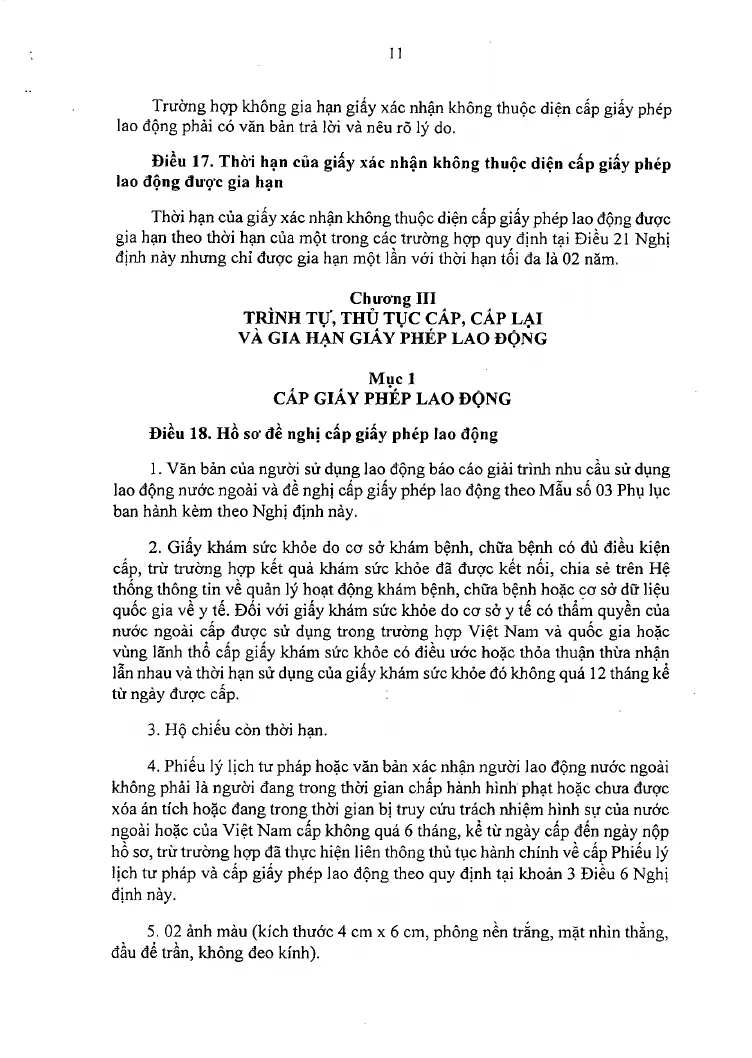
Inspecting and handling violations of residence law is a Ministry of Public Security task. A visit to check papers at a rented home is that role at work.
A foreigner moving around Vietnam must carry a passport or international travel document and the papers related to residence in Vietnam. They must present them when a competent authority asks. Keep your passport and residence papers with you.
Have these ready.
- Your passport or another international travel document.
- The papers issued to a foreigner for entry, exit or residence in Vietnam.
- The same papers for your host, who files the residence declaration.
The Nha Trang emergency numbers are in the emergency numbers guide. 113 is the call service number for the police. UK advice says Vietnam’s emergency numbers are Vietnamese only, to take a translator when reporting a crime and to always get a police report.

A real fine, or a cash demand?
Without a written record, an officer can issue a penalty decision on the spot only for a warning or a fine up to VND 500,000 for an individual. You must be handed one copy of that decision. Whoever collects cash must give you a payment document.
Bigger fines are paid at the State Treasury or into the Treasury account named in the decision, within 10 days of receiving the decision. In remote, border or mountain areas where travel is difficult, you may pay the fining officer, who pays it in within 7 days.
At sea or outside office hours, the officer may collect the fine directly and must pay it into the Treasury within 2 working days. In every case, the collector must give you a payment document.
| What happened | Fine for an individual |
|---|---|
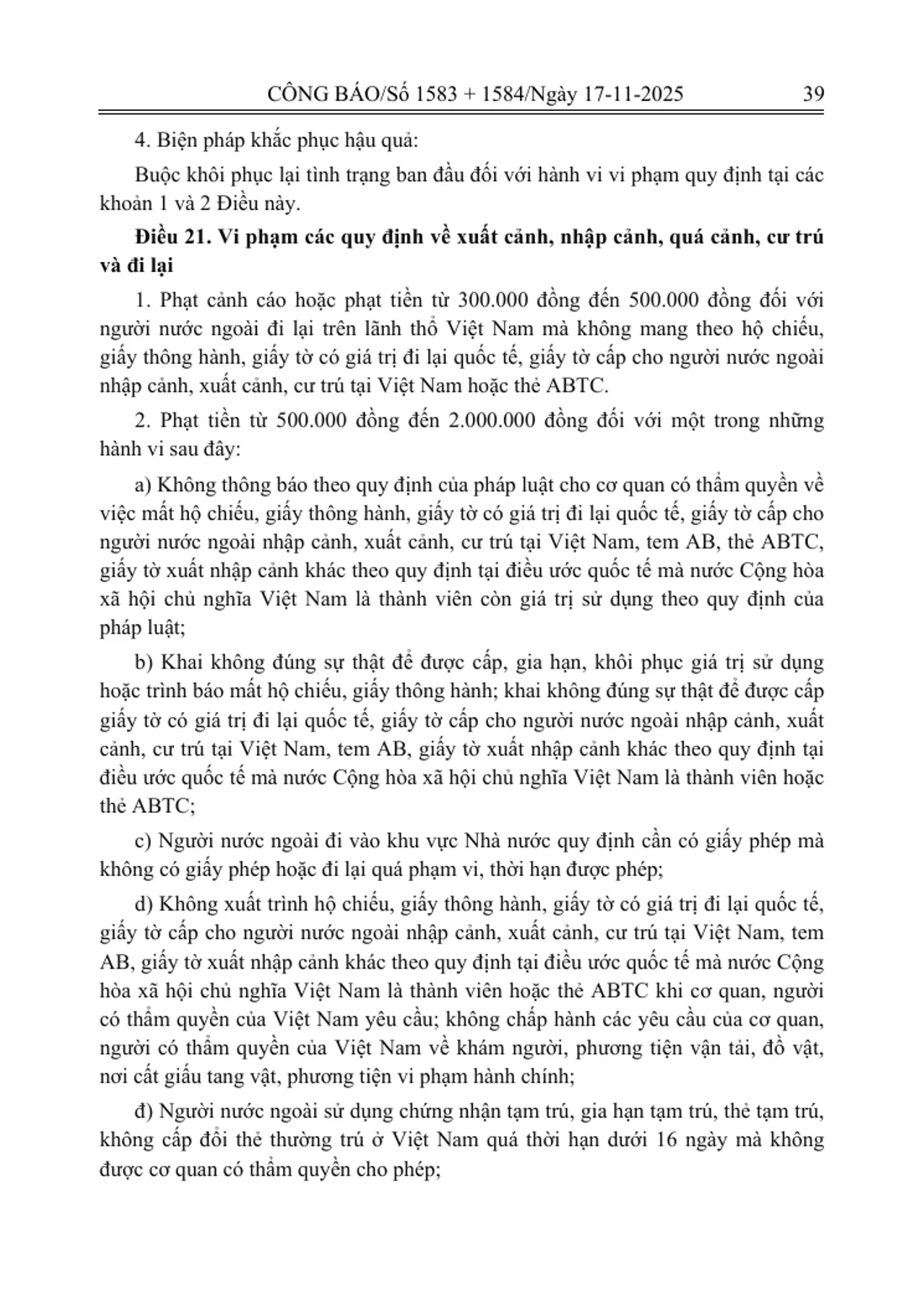
| You moved around Vietnam without your passport, travel document or residence papers | A warning, or VND 300,000 to 500,000 |
| You did not present those papers when a Vietnamese authority asked | VND 500,000 to 2,000,000 |
| You did not hand your passport or residence papers to the accommodation for the declaration | VND 3,000,000 to 5,000,000 |
Your landlord’s residence declaration
The declaration is not filed by the guest. A foreigner temporarily residing in Vietnam declares that residence through the person who directly manages or runs the accommodation. It goes to the commune, ward or special-zone police, or the police post or station, where the accommodation is. Before it lets you stay, the accommodation asks to see your passport and your residence papers.
On the Khanh Hoa police service list, this procedure is carried out by the commune-level police. Resolution 1667/NQ-UBTVQH15 merged the old Loc Tho ward and four others into one ward named Nha Trang.
If the declaration is missed, the fine lands on the accommodation.
| Foreign guests not declared | Fine on the accommodation |
|---|---|
| 1 to 3 guests | VND 3,000,000 to 5,000,000 |
| 4 to 8 guests | VND 10,000,000 to 15,000,000 |
| 9 guests or more | VND 15,000,000 to 20,000,000 |
Those are the amounts for an individual host, and an organisation is fined at double the individual rate. Whoever lets a foreigner stay while the foreigner is residing unlawfully, or sees signs of a violation and does not report it, is fined VND 20,000,000 to 25,000,000.
An electronic declaration must be filed the moment the foreigner arrives at the accommodation. For a paper form, the police check it, confirm it, keep a copy and hand it straight back to whoever filed it. The steps are in temporary residence registration for foreigners.

If you have overstayed
Overstaying is fined on a rising scale, from VND 500,000 to 2,000,000 under 16 days up to VND 30,000,000 to 40,000,000 at a year or more.
| Days past your permitted stay | Fine |
|---|---|
| Under 16 days | VND 500,000 to 2,000,000 |
| 16 to under 30 days | VND 5,000,000 to 10,000,000 |
| 30 to under 60 days | VND 10,000,000 to 15,000,000 |
| 60 to under 90 days | VND 15,000,000 to 20,000,000 |
| 90 to under 180 days | VND 20,000,000 to 25,000,000 |
| 180 days to under 1 year | VND 25,000,000 to 30,000,000 |
Deportation may be added to overstay of 16 days or more. A foreigner deported from Vietnam is refused entry for less than 3 years after the decision took effect.
The full bands and exit steps are in Vietnam overstay fines. The Khanh Hoa immigration division, at 47 Ly Tu Trong, handles stay extensions. If your stay is running out, see how to extend your visa in Nha Trang.
Read next
- Work permit in Nha Trang
- Temporary residence registration in Nha Trang
- Nha Trang immigration office
- Business visa in Nha Trang
- Vietnam visa types
Photos and clips uploaded to Google Maps (Khanh Hoa Public Administration Service Center on Google Maps (opens in a new tab), Khanh Hoa immigration office on Google Maps (opens in a new tab)) by @J, @Cat Fox, @Evgenii Lukashevich.
Step by step
- Choose how to fileOnline filing is the default for people with an electronic identity. A foreigner without one files in person or by post.
- Prepare the documentsYou need a declaration form and a passport copy, with the original shown. Add papers proving residence in Vietnam.
- File with the Khanh Hoa policeFile in person at the Public Administration Service Center, 26 Hoang Hoa Tham. Post and online filing are also listed.
- Pay the feeThe fee is VND 200,000 per time per person.
- Wait for the resultThe law sets 5 working days, and up to 15 where verification is needed. Online filers follow the file on the portal or the app.
Not confirmed: Whether the counter applies the 5-working-day deadline or the 10 days its procedure page still shows. Which declaration form a foreigner fills in after 1 July 2026, since the pages list the 2025 forms. How a foreigner gets the identification account needed to file online.
Common questions
Who issues a criminal record certificate to a foreigner in Nha Trang?
The Khanh Hoa provincial police handle the procedure for foreigners currently residing locally, through the Professional Records Division. In-person filing is at the Public Administration Service Center, 26 Hoang Hoa Tham.
Is it still the Department of Justice?
Not under the current rules. The original 2009 text gave the case of a foreigner residing in Vietnam to the provincial Department of Justice. A Ministry of Public Security decision of 25 February 2025 listed the procedure among those under the ministry.
Can a foreigner apply online?
Online filing needs a level-2 identification account on the portal or the national identification app. The law makes online the default for people with an electronic identity, and foreigners without one may file in person or by post.
How much does it cost and how long does it take?
The fee is VND 200,000 per time per person since 1 January 2026. The law sets 5 working days, and up to 15 where verification is needed.
What is the difference between Certificate No. 1 and No. 2?
Under the original 2009 text, No. 1 shows a person with an expunged conviction as having no criminal record. No. 2 lists expunged and unexpunged convictions in full and is issued on the individual's request.
What documents does a foreigner bring?
A declaration form and a copy of the passport, with the original shown. A foreigner filing with a passport also shows papers proving residence in Vietnam.
Can someone else file for me?
A person asking for a certificate for their parent, spouse, child or ward needs no power of attorney. For Certificate No. 2 the individual may not authorise another person, except that a minor may authorise a parent or guardian.
Do I need a criminal record certificate for a work permit?
The dossier needs a judicial record or a certification, issued no more than 6 months before filing. Foreign-issued papers must be consularly legalised unless an exemption applies.
Is it normal for police to check a foreigner's passport at a rented home?
It has a legal basis. A foreigner must carry a passport and residence papers and present them when a competent authority asks. Inspecting residence law is a Ministry of Public Security task.
What is the fine for not carrying a passport in Vietnam?
Moving around without a passport, travel document or residence papers is a warning or a fine of VND 300,000 to 500,000. Not presenting them when an authority asks is VND 500,000 to 2,000,000.
Read next
General information checked against the sources listed above, not legal advice for your situation. Rules and office practice change; confirm with the immigration office or a licensed adviser before you act. See how guides are checked.
Spotted an error? Report it.