Send Money To and From Vietnam as a Foreigner: Nha Trang Guide (2026)
Money in carries low published fees: Vietcombank receives SWIFT transfers free, and BIDV does when the money arrives in VND. Money out goes through a Vietnamese bank at 0.2% per transfer, minimum US$5, plus VAT and any correspondent-bank charges. Neither bank publishes a cap on the amount; it follows proof of lawful income.
Your salary lands in a Vietnamese account in dong. You want some of it home, and money from abroad arrives for you. Sending money in is easy to arrange. Sending it out goes through a bank, and the bank asks what the money is.
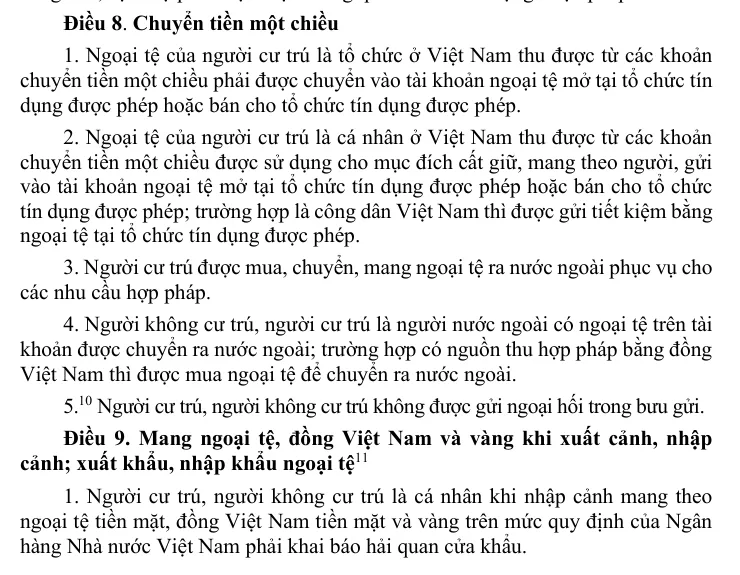
A non-resident, or a resident who is a foreigner, who has foreign currency in an account may transfer it abroad. With lawful income in dong, the person may buy foreign currency to send.
Người không cư trú, người cư trú là người nước ngoài có ngoại tệ trên tài khoản hoặc các nguồn thu ngoại tệ hợp pháp được chuyển, mang ra nước ngoài; trường hợp có nguồn thu hợp pháp bằng đồng Việt Nam thì được mua ngoại tệ để chuyển, mang ra nước ngoài
A non-resident, or a resident who is a foreigner, who has foreign currency in an account or lawful foreign-currency income may transfer or carry it abroad; with lawful Vietnamese-dong income the person may buy foreign currency to transfer or carry abroad.
Nghị định 70/2014/NĐ-CP, Điều 7 khoản 3
The one thing to get right is the paper trail: proof that the money is lawful income. To open the account first, read open a bank account in Nha Trang.
Which route to use: quick pick
Money in: pick the sender by what the recipient holds. A bank account takes Wise or Western Union. A MoMo or VNPT Pay wallet takes Xoom, and cash goes through a Western Union agent.
Money out: use a Vietnamese bank’s SWIFT transfer. Wise’s VND page covers only sending dong from a Wise account to accounts inside Vietnam. A bank charges 0.2% per transfer, minimum US$5.
Every figure below is the price a provider or bank publishes for its own service in October 2026, and each fee line carries its schedule date. Exchange-rate margins are not published by the senders.
Sender, money into Vietnam
Fee
Speed
Wise
From 0.24%, varying by currency
Usually 1 working day into a bank account
Western Union
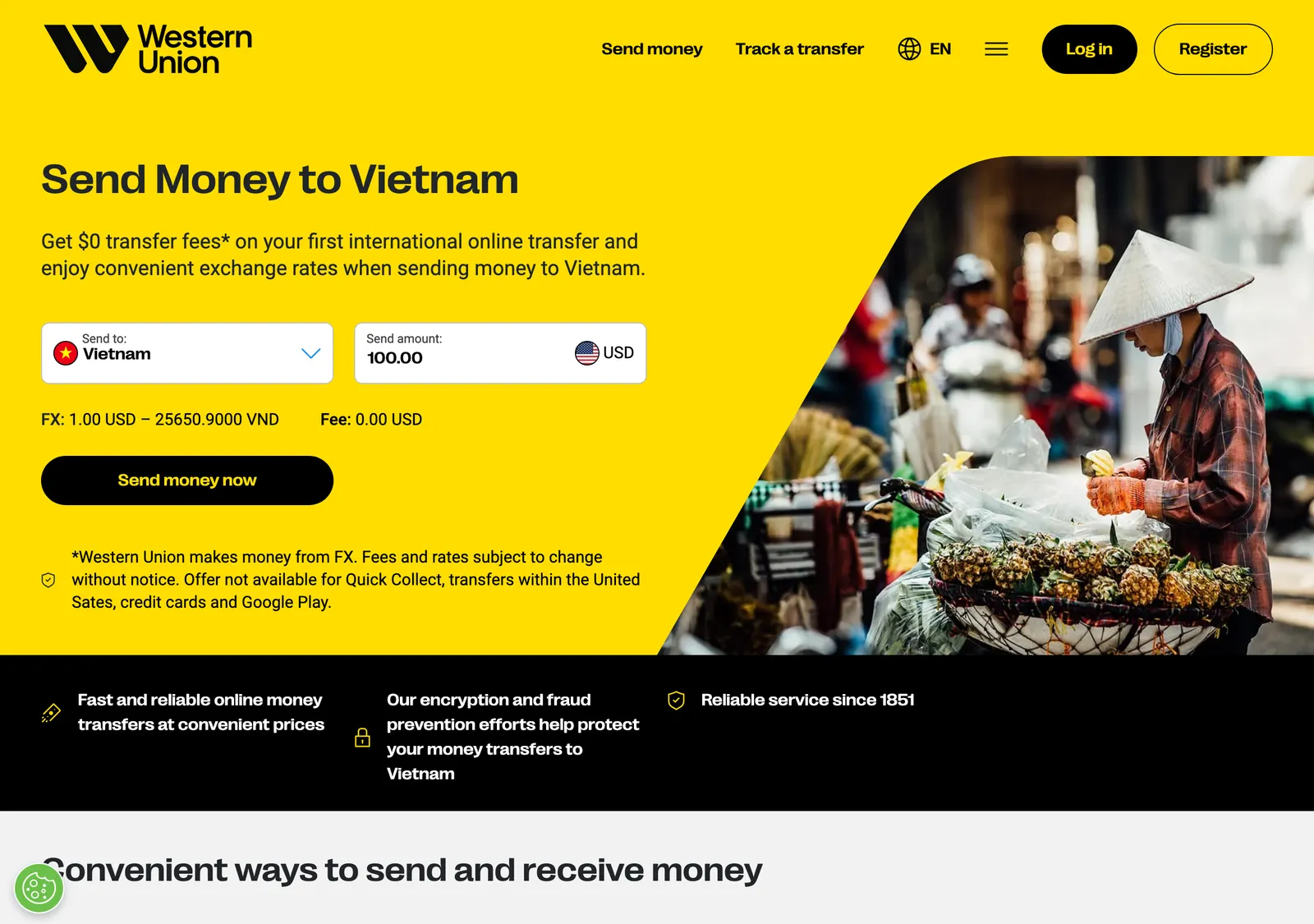
$0 on a first online transfer
Minutes to a Vimo wallet
WorldRemit
Depends on the receive method
90% within minutes
Xoom
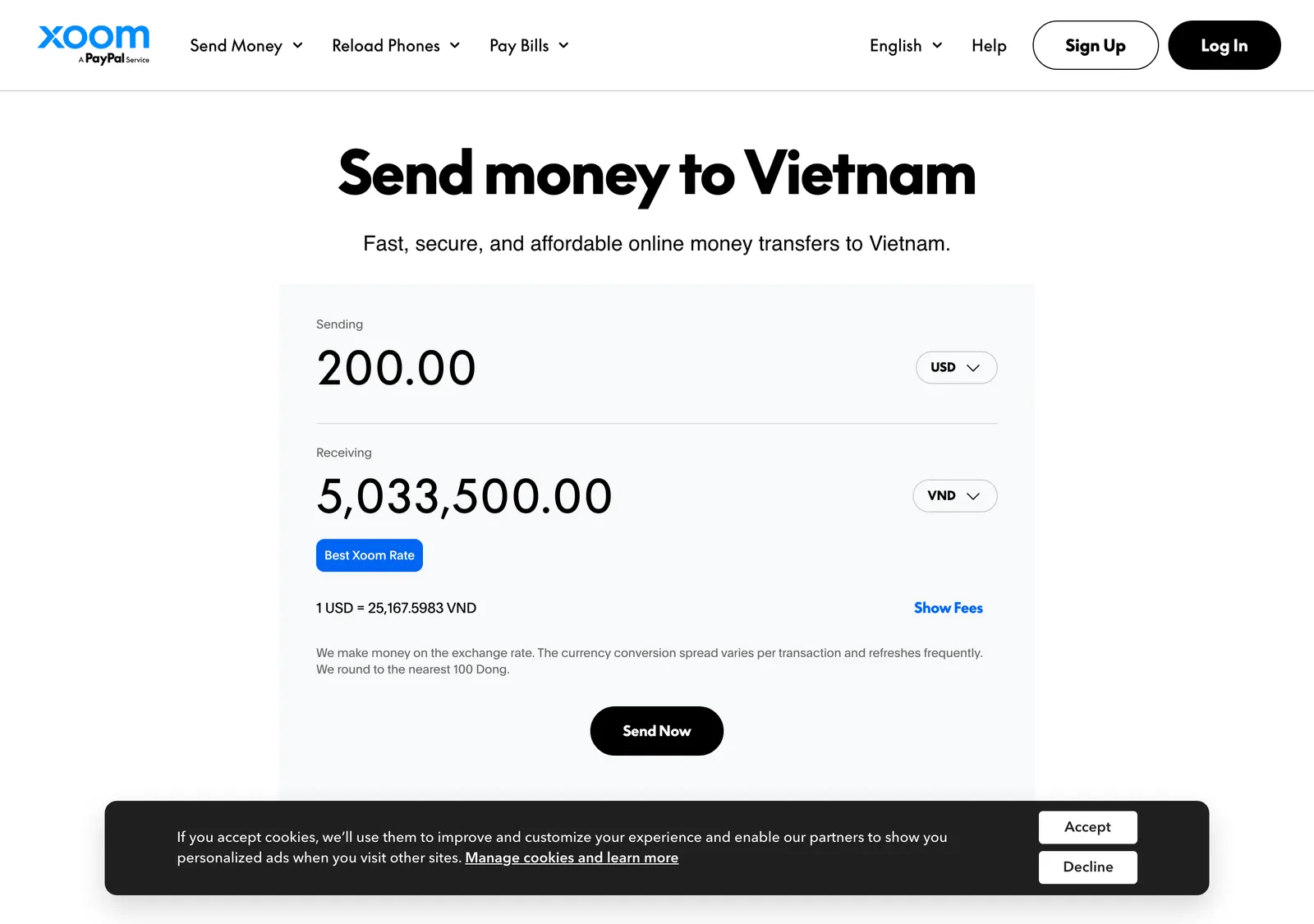
Earns on the exchange rate
Usually minutes
Receiving bank
Fee to receive
Vietcombank, SWIFT
Free into an account or as cash at its counters
BIDV, SWIFT
Free when the money arrives in VND
Money out of Vietnam
Fee
What to bring
Vietcombank, SWIFT at the counter
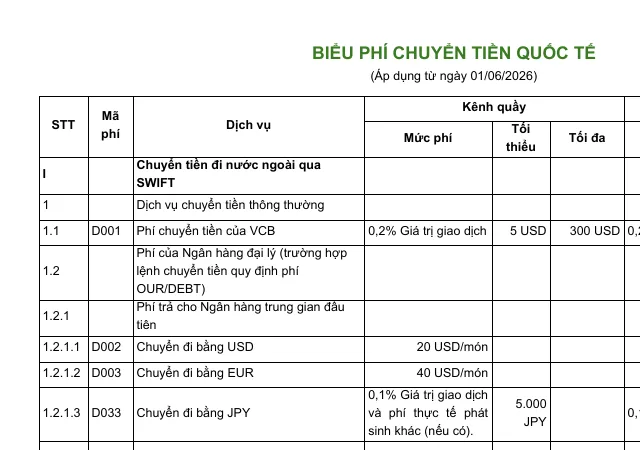
0.2%, minimum US$5, maximum US$300, schedule of 1 June 2026
Identity paper, proof of foreign status, proof of lawful income
BIDV, SWIFT
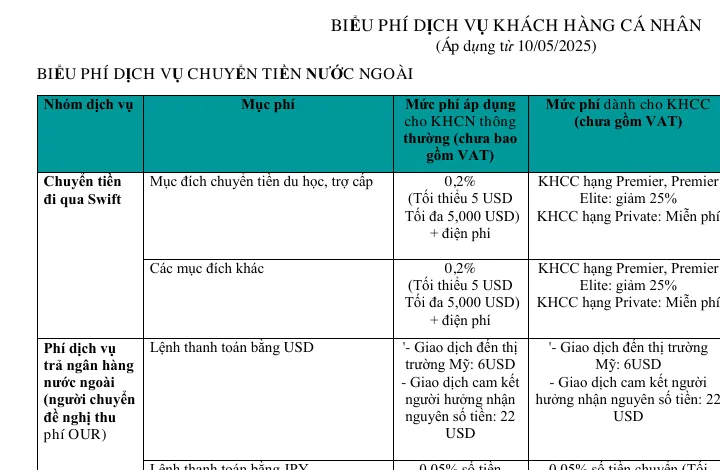
0.2%, minimum US$5, maximum US$5,000, plus a telex fee, schedule of 10 May 2025
Identity paper and papers proving the purpose
Cash carried out
Customs declaration above US$5,000 or VND 15,000,000
Wise: app transfers into a Vietnamese bank account
The sender pays in US dollars and the recipient gets dong from Wise’s local bank account. The recipient does not need a Wise account to be paid into a local bank.
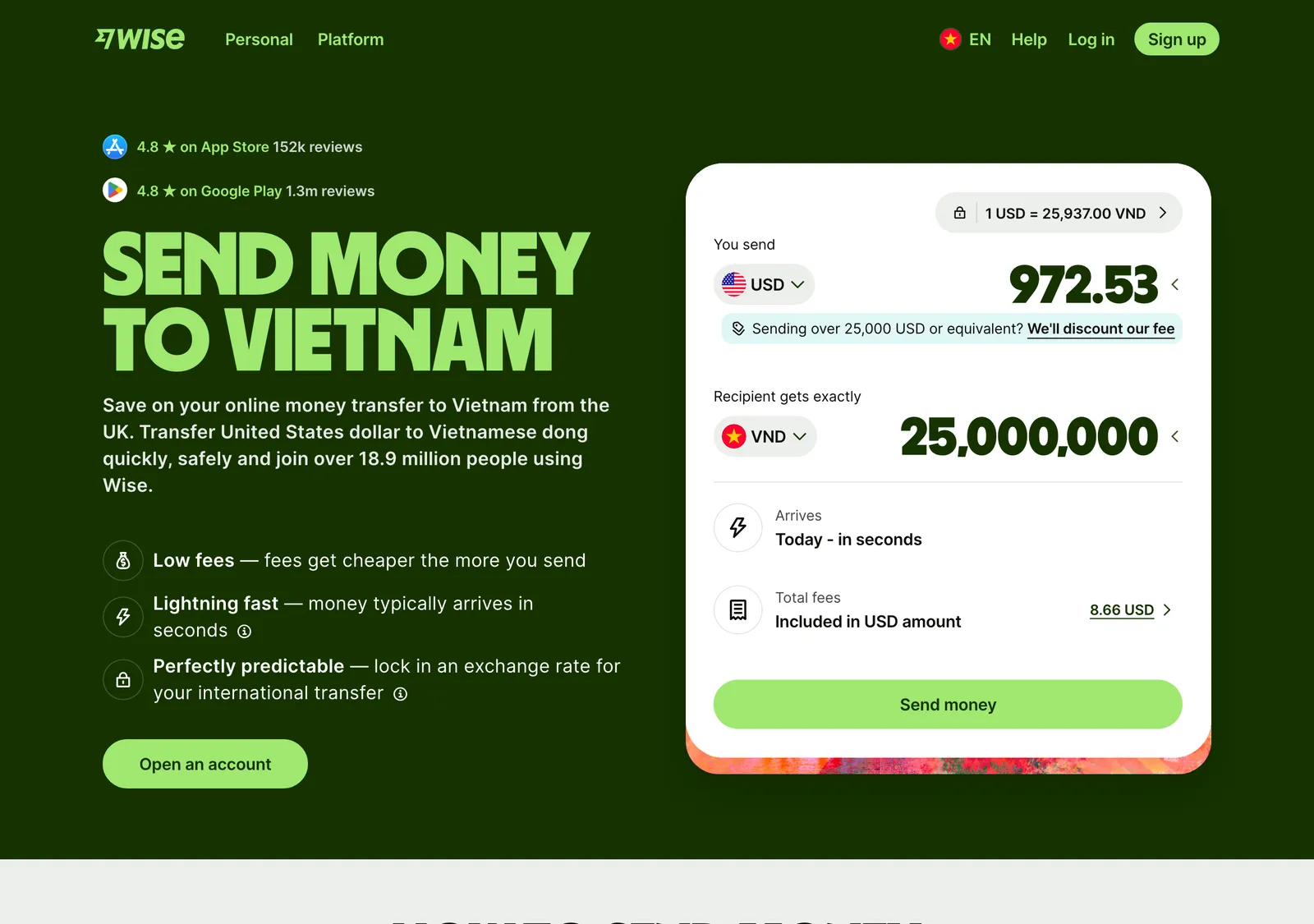
The sending fee varies by currency and starts at 0.24% on Wise’s pricing page in October 2026. The cheapest way to send is from money already held in a Wise account. Transfers above 25,000 USD get a discount on the fee.
Limits are set per transfer: up to 499,999,999 VND. The minimum is 10,000 VND for a personal recipient and 50,000 VND for a business recipient. The sender needs the recipient’s full name, bank name and account number.
A VND transfer usually takes 1 working day to reach the recipient’s bank after conversion, which can take up to 2 working days. Wise says 74% of transfers arrive in under 20 seconds and 95% in less than a day, depending on how you pay.
Wise says it uses only the mid-market rate, the one you can check on Google. If a bank transfer to Wise was not linked to your payment, you upload a proof of payment document.
Good for: a monthly salary into a Vietnamese account, and repeat transfers.
Skip if: you want to move money out of Vietnam. VND can only be sent from a Wise account to bank accounts in Vietnam.
Western Union: bank accounts, wallets and agents
Western Union says it transfers directly to accounts at all major banks in Vietnam. It can also send to Vimo mobile wallets, with delivery in minutes. The US page offers a $0 transfer fee on a first international online transfer.
Western Union also makes money from foreign exchange. To send to a bank account it needs the recipient’s full name, address with postal code, bank name and account number.
An in-person transfer to a bank account can take up to 3 bank business days in the destination country. At a Western Union agent, the sender pays cash including the transaction fee.
Good for: a first online transfer with a $0 fee, and a recipient who wants cash or a Vimo wallet.
Skip if: the money must reach a bank account today, because the in-person route can take up to 3 bank business days.
WorldRemit and Xoom
WorldRemit
WorldRemit says its transfer fee depends on the receive method and does not vary with the amount. It says 90% of transfers to Vietnam reach its local partners within minutes. It requires a bank account, debit card or credit card to pay.
Xoom
Xoom says funds are typically deposited in minutes. Door-to-door delivery arrives the same day in city areas and within 2 days in most rural areas. It can send to the MoMo and VNPT Pay wallets.
Xoom also makes money when it changes the send currency into another currency.
Skip if: the recipient lives outside a city, where the quoted door-to-door delivery is within 2 days.
Receiving in a Vietnamese bank account
A resident individual who receives foreign currency from one-way transfers may keep it or carry it. The person may also deposit it in a foreign-currency account at a licensed credit institution, or sell it to one. A resident may deposit it into a foreign-currency account or withdraw it in cash for the purposes in Article 13 of the decree.
A non-resident individual may credit a foreign-currency account with money transferred in from abroad. That person may debit it to withdraw cash, or to transfer abroad.
Vietcombank accepts SWIFT receipts in VND, USD or other currencies it accepts. Receiving into a bank account, or cashing out at its counters, is free.
BIDV says SWIFT transfers support many currencies with no limit on the amount received. They are free when received in VND. Western Union money can be received free at BIDV branches nationwide, in VND or USD.
Vietcombank’s counter guide says it applies to Vietnamese and foreign individuals transacting at the bank. Its English page lists foreign residents legally residing and working in Vietnam among customers who can transfer money abroad.
Its own fee is 0.2% of the transaction value, minimum US$5, maximum US$300, from the schedule applying from 1 June 2026. The English page says SWIFT transfer fees start from 5 USD. It also gives a MoneyGram processing time of 10 minutes.
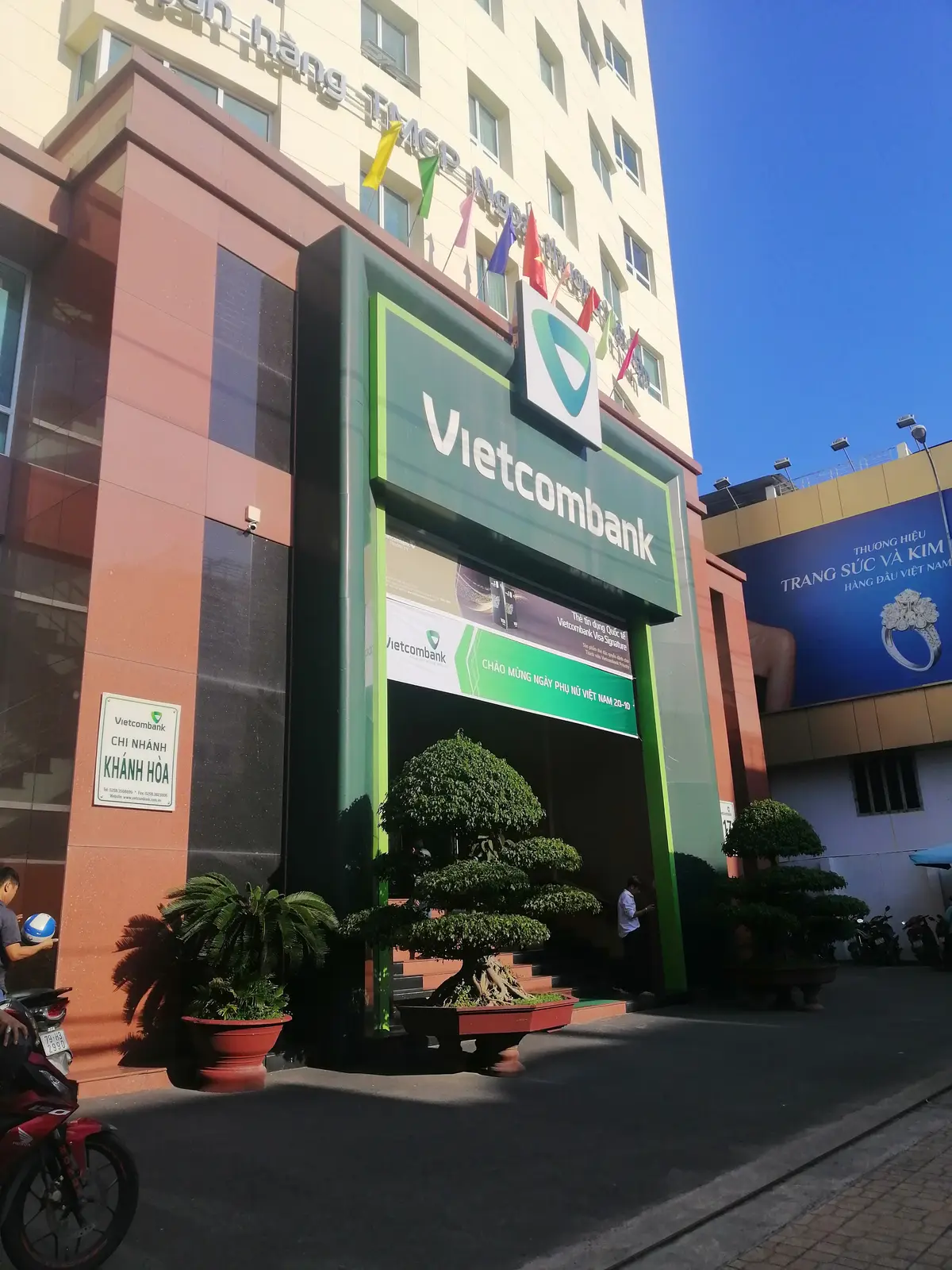
Vietcombank announced a change of address for its branches and transaction offices from 01/07/2025. The appendix lists these Nha Trang offices.
Office
Address in the 01/07/2025 appendix
Khanh Hoa branch head office
17 Quang Trung Street, Nha Trang Ward
Nguyen Thien Thuat transaction office
9 Nguyen Thien Thuat Street, Nha Trang Ward
Binh Tan transaction office
192 Da Tuong apartment block, Nha Trang Ward
Phuoc Hai transaction office
Thich Quang Duc Street, Le Hong Phong 1 urban area, Nam Nha Trang Ward
Vinh Phuoc transaction office
626 Street 2/4, Bac Nha Trang Ward
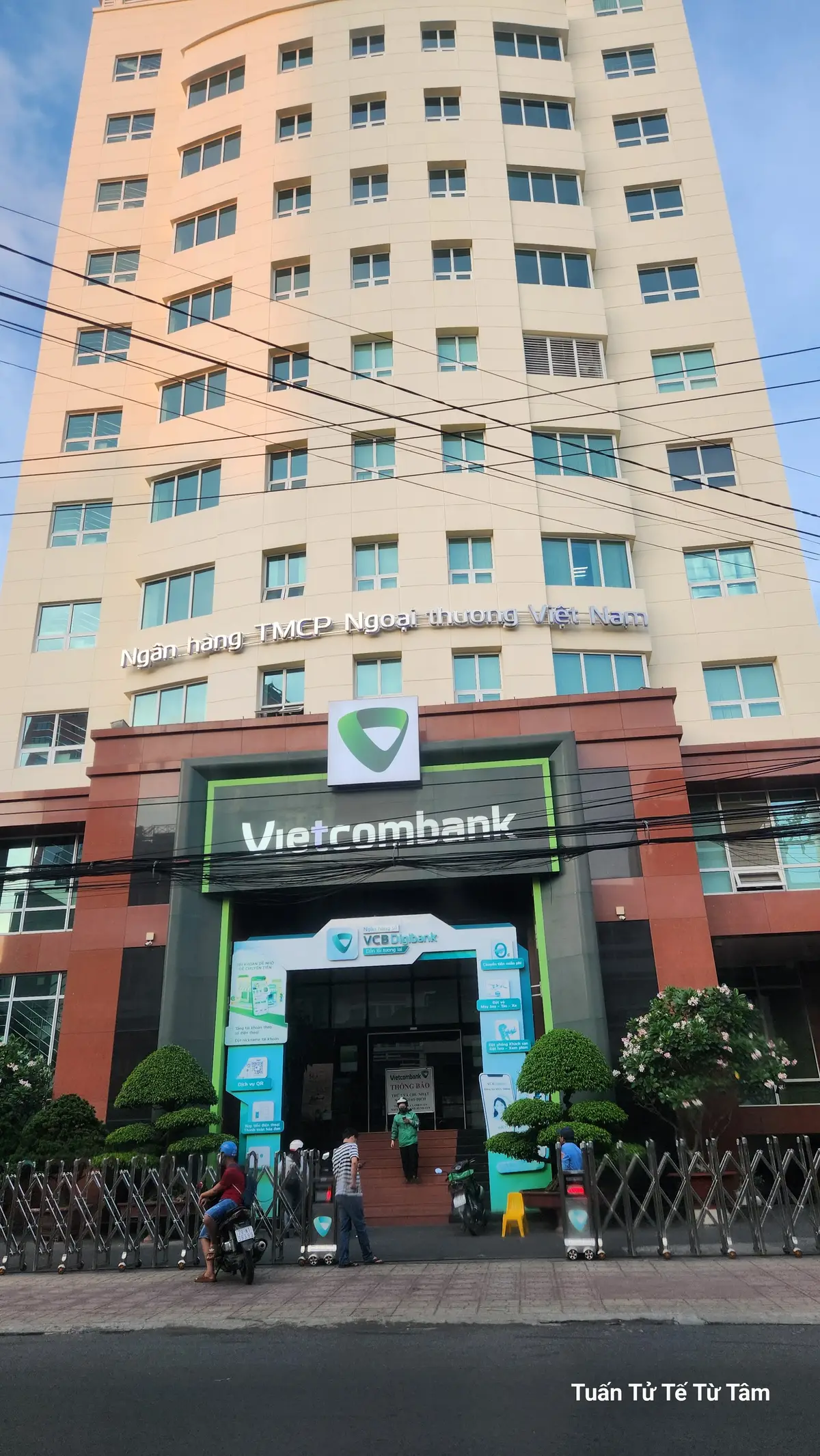
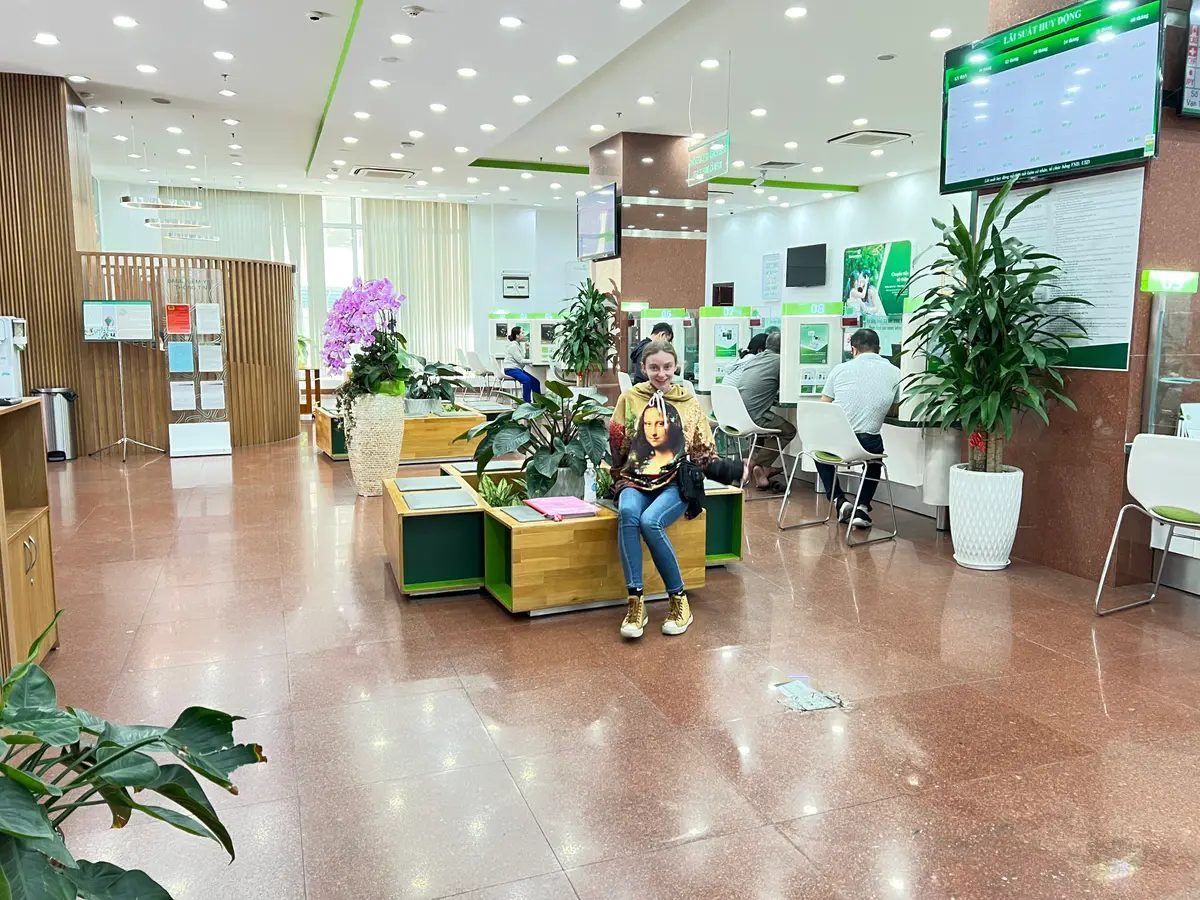
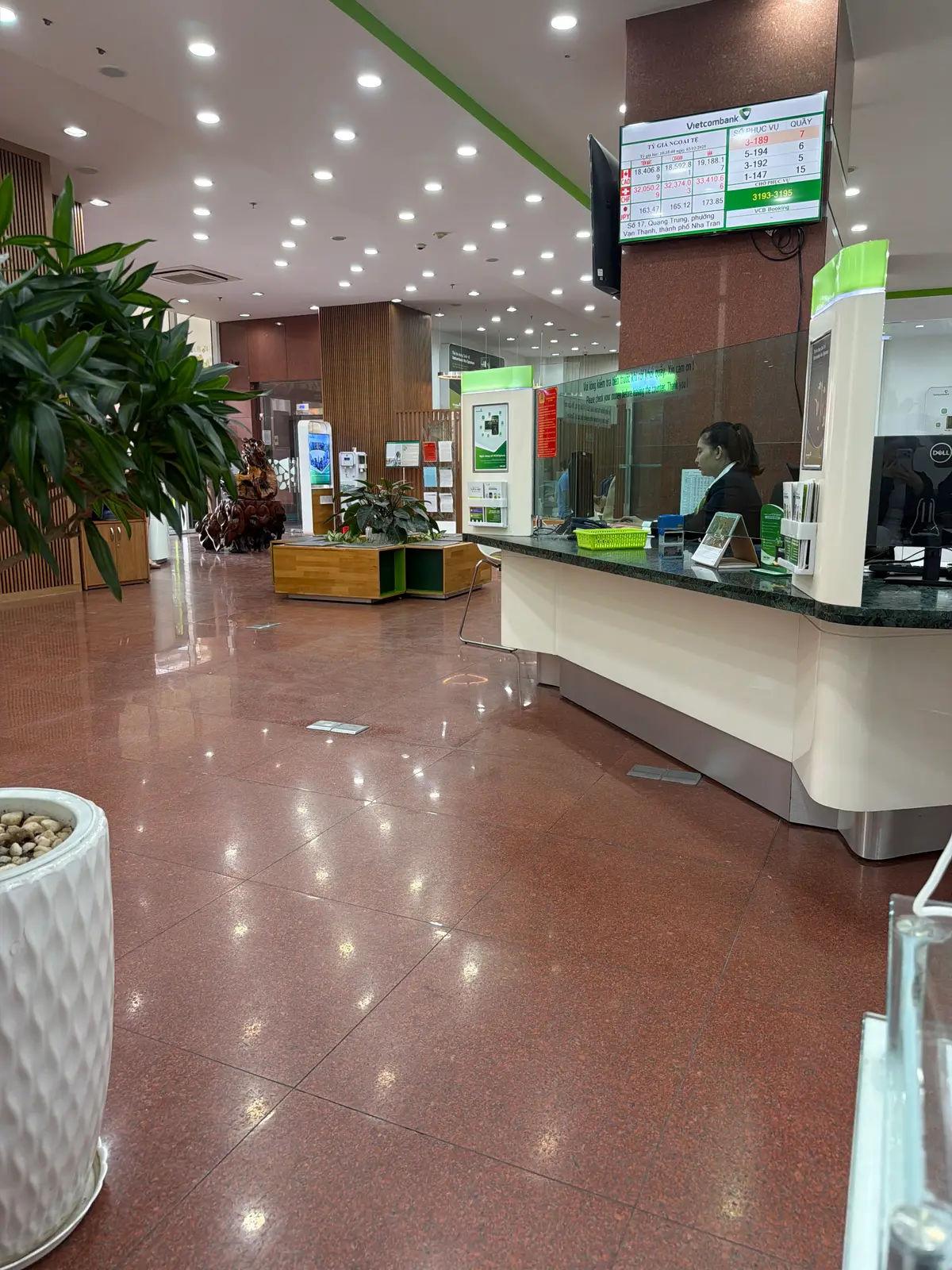
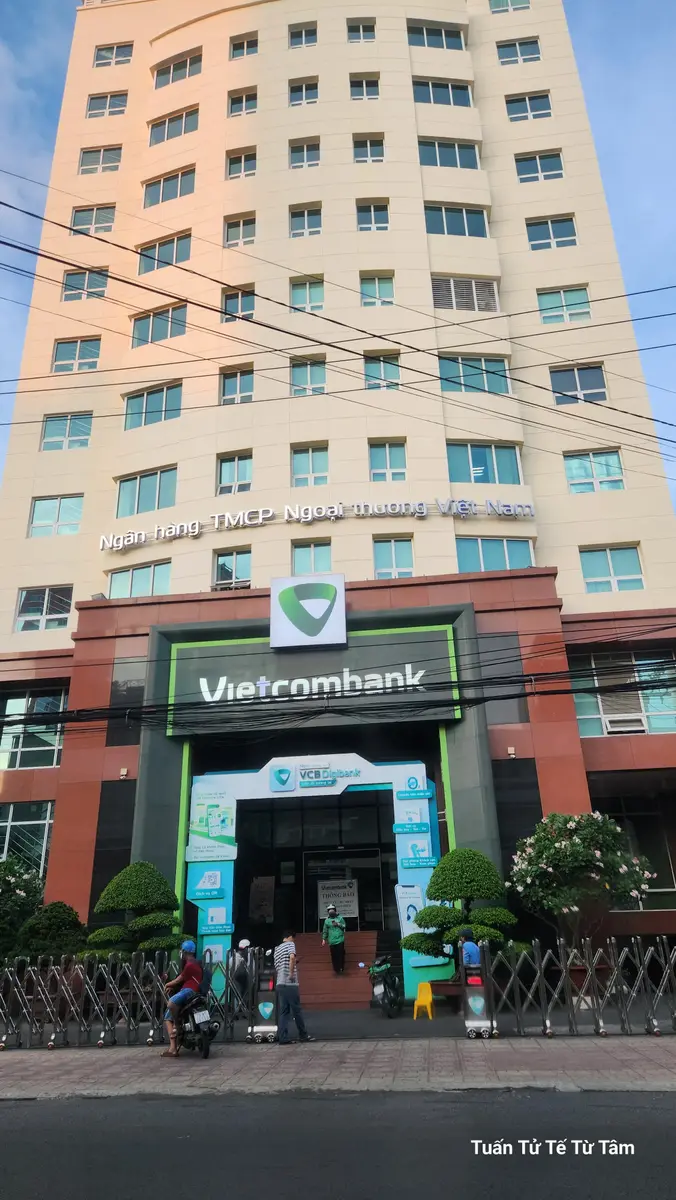
The Vietcombank Khanh Hoa branch building.The banking hall of the Vietcombank branch.The entrance of the Vietcombank branch.
Good for: a large transfer, where the percentage fee stops at US$300.
Skip if: the amount is small, because the minimum charge is US$5.
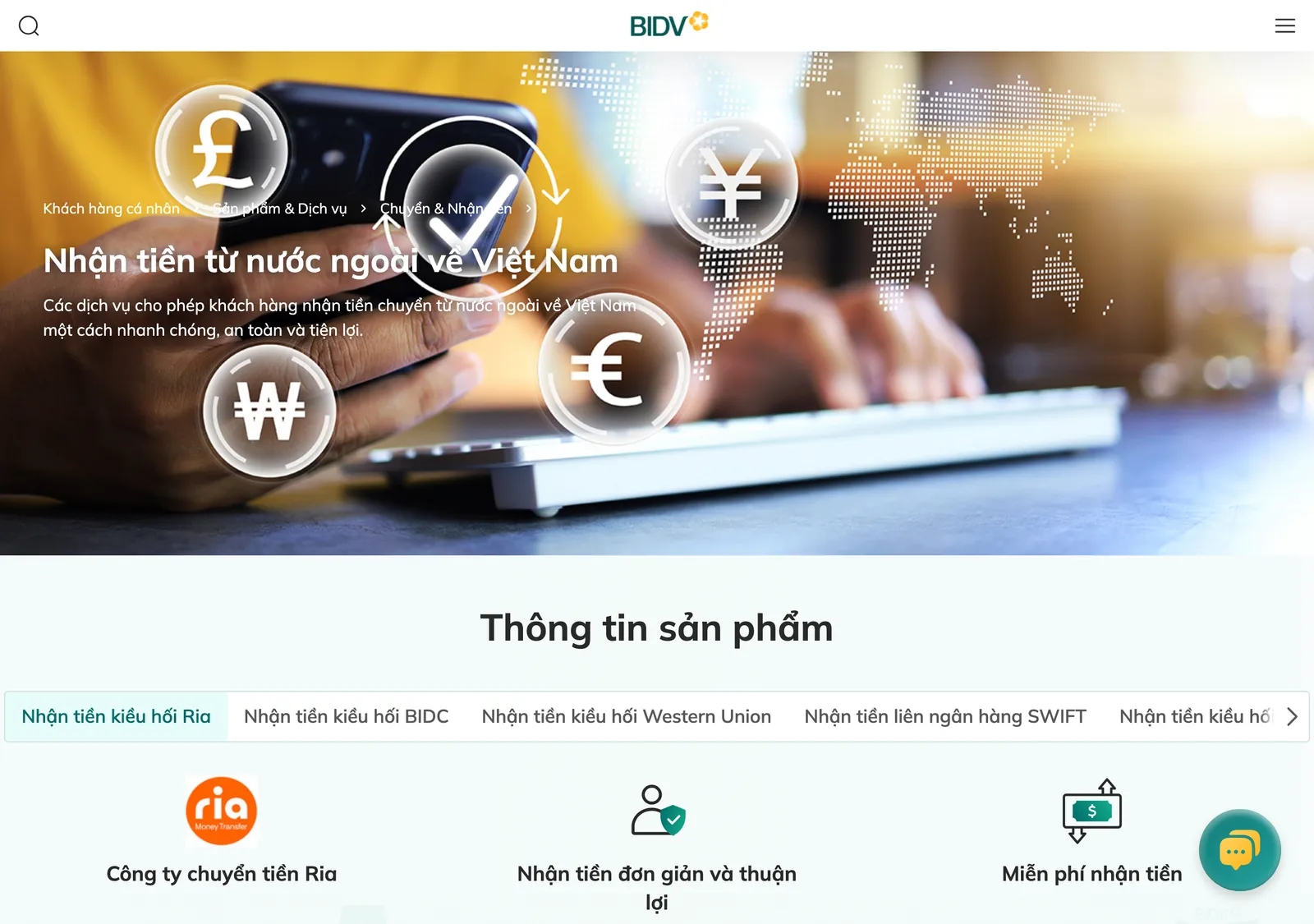
BIDV supports cash and account transfers in many currencies, including VND, USD, EUR, AUD and CAD. Its text includes the phrase for transferring lawful income home.
Its SWIFT fee for other purposes is 0.2%, minimum US$5, maximum US$5,000, plus a telex fee, from the schedule applying from 10 May 2025. Western Union transfers out through BIDV take within 10 minutes.
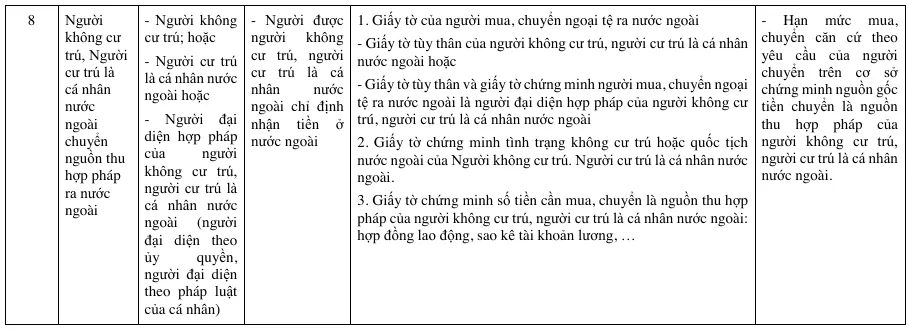
For SWIFT, BIDV’s list names a valid identity paper, and for a foreign individual a temporary or permanent residence card in Vietnam, plus papers proving the purpose.
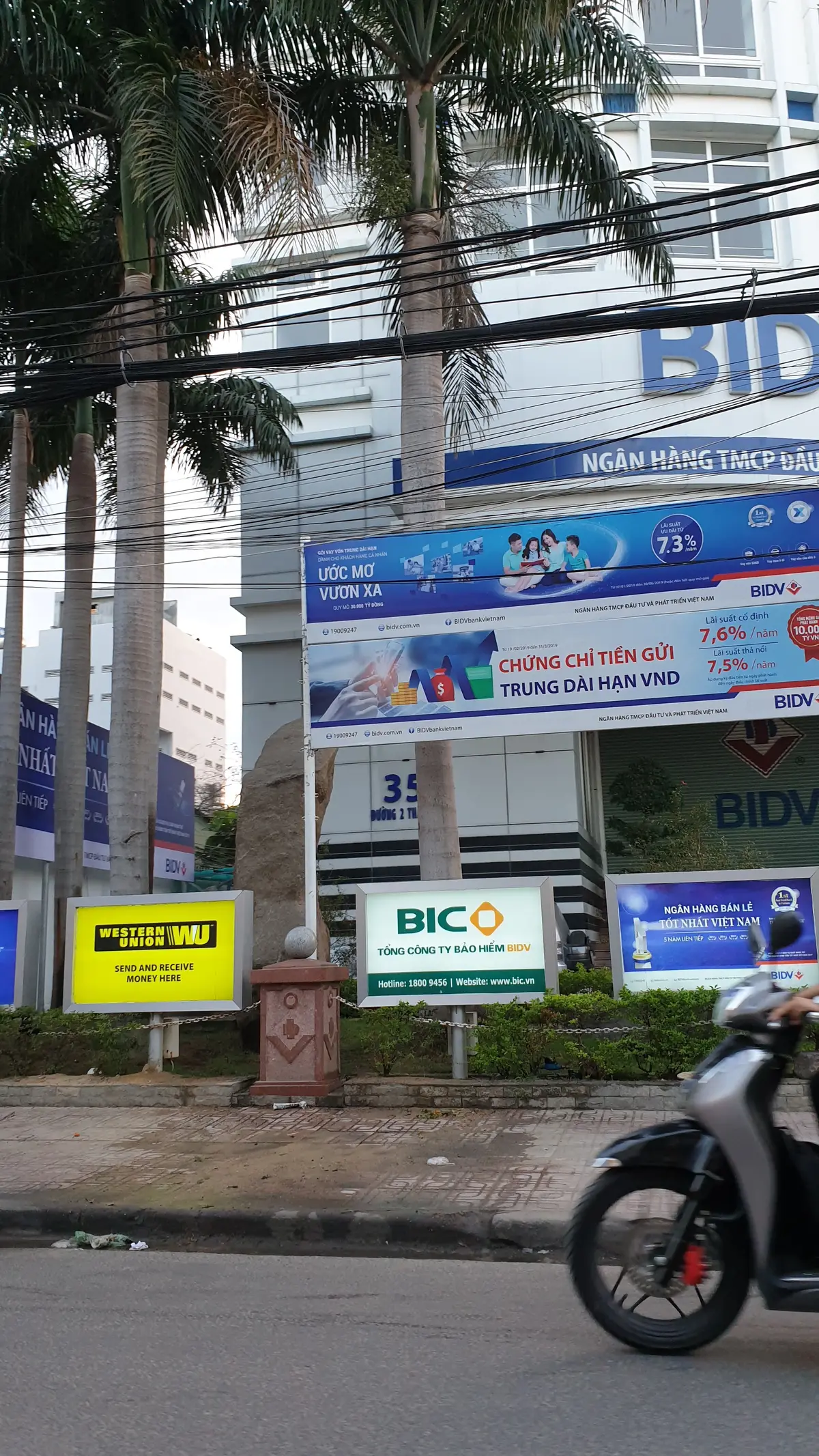
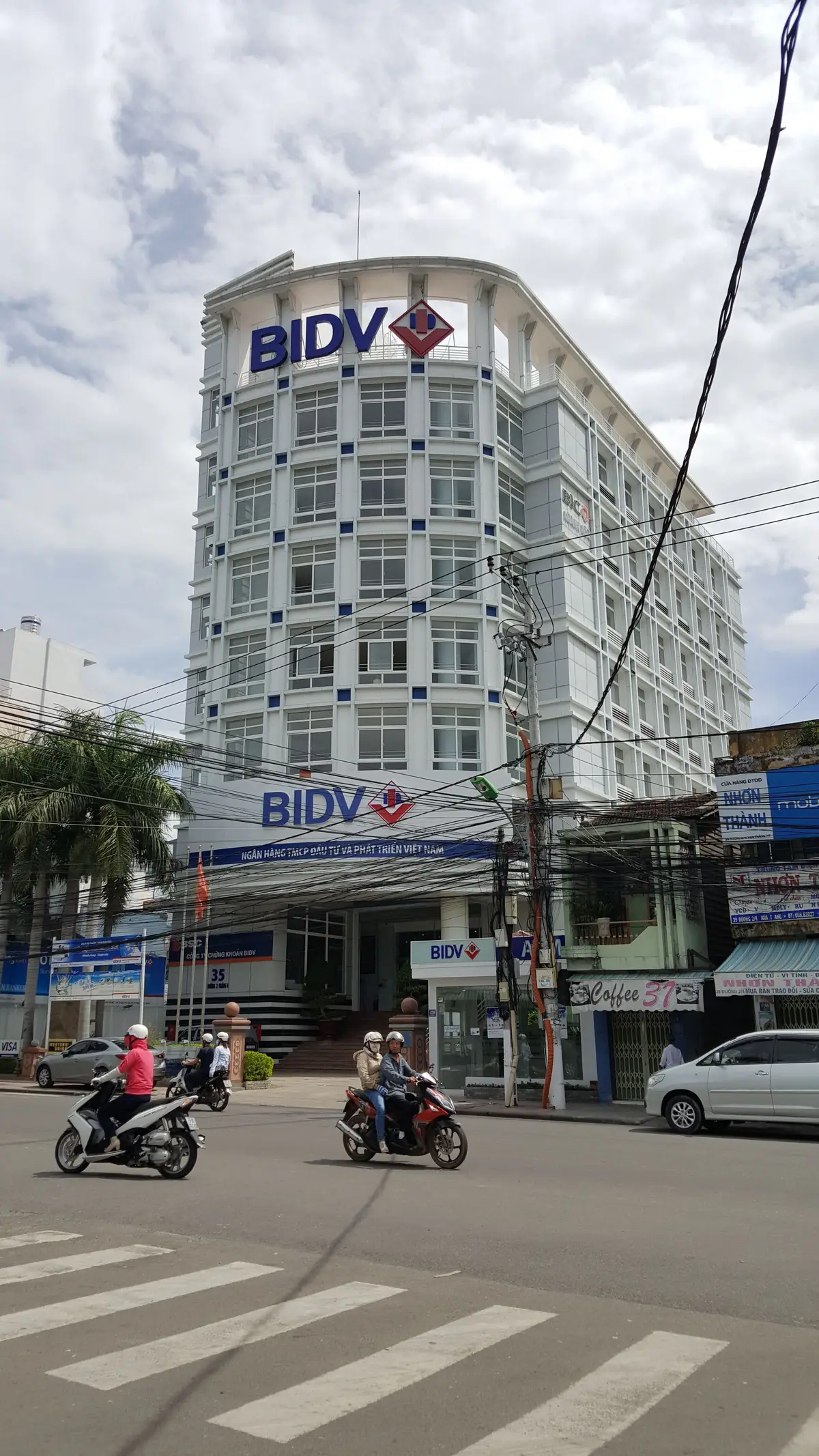
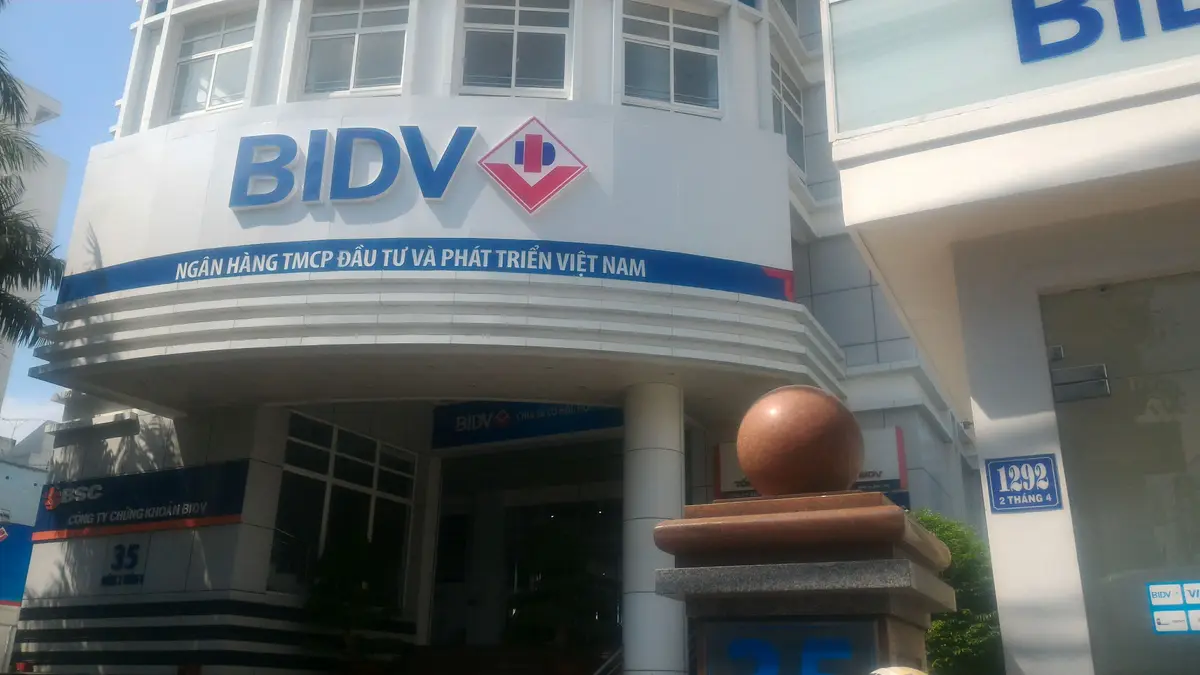
The BIDV Khanh Hoa branch gave its address as 1292, 2/4 Street, Van Thanh Ward, Nha Trang City, in a notice posted 25/11/2024. The change applies from 28/11/2024. The phone number in that notice is 0258.3823495.
Van Thanh Ward is one of the five wards merged into the new Nha Trang Ward.
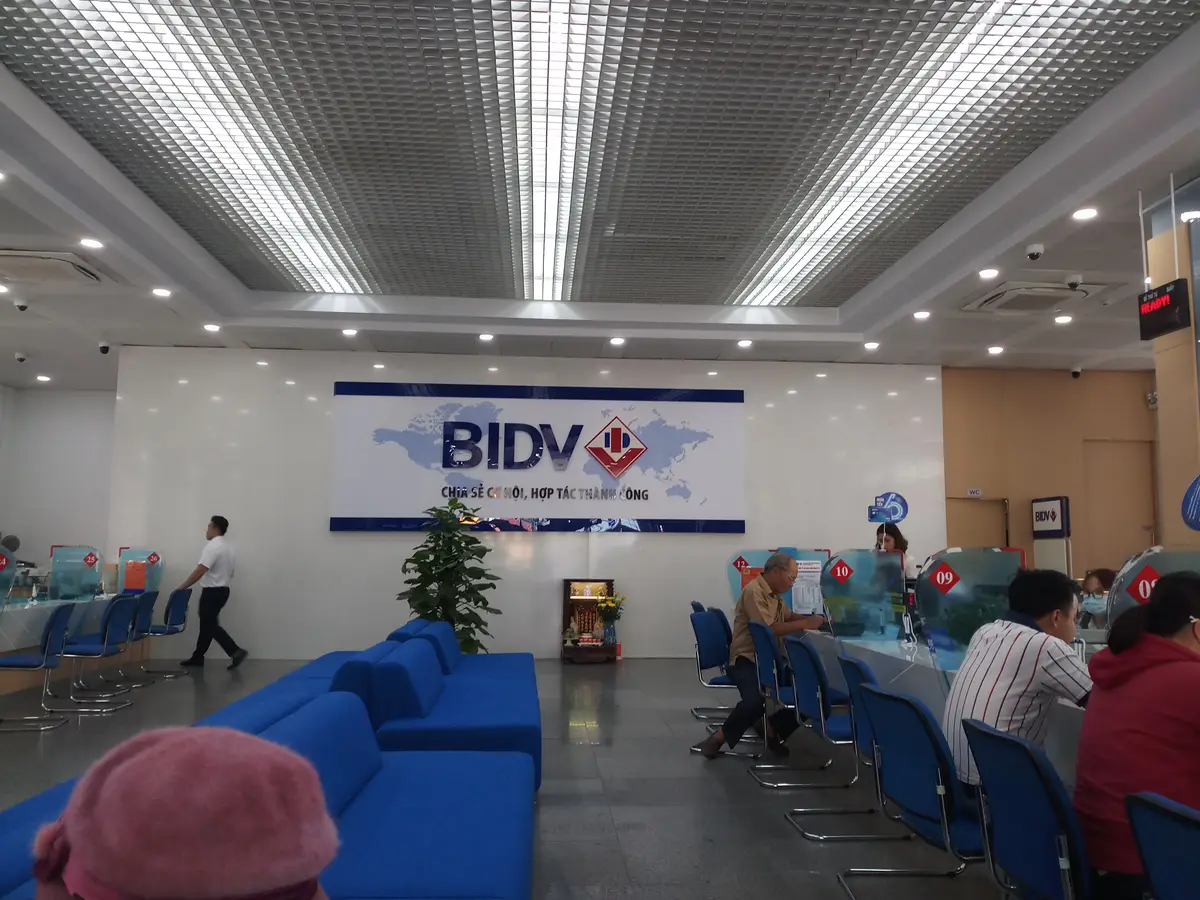
The BIDV Khanh Hoa branch building.The banking hall of the BIDV Khanh Hoa branch.The curved front of the BIDV branch.
Good for: a Western Union transfer out, where the money leaves within 10 minutes.
Skip if: you send a large amount by SWIFT, because the percentage fee is capped at US$5,000 and the telex fee comes on top.
Before you send: check the provider and the rate
A credit institution, foreign bank branch or other organisation may provide foreign-exchange services in Vietnam only after the State Bank approves in writing. A bank counter is the clearest case.
Red flags
A street or shop changer with no bank behind it.
A rate that is not shown until you have paid, since Western Union and Xoom say they earn on the exchange rate.
Foreign exchange sent by post, because residents and non-residents may not send it in postal items.
Test the rate
Before you pay, write down the rate on the provider’s screen. Wise says it uses only the mid-market rate, the one you can check on Google. Compare the two, and the gap is the rate cost on top of any fee.
For a bank transfer out, Vietcombank’s English exchange-rate page lists cash buying, telegraphic buying and selling rates. The bank’s fee schedules carry no rate, so that posted list is the check.
A service counter in the branch.
If a transfer is held, rejected or lost
Treat a hold as a papers problem first. The bank must examine the papers you present for each transfer, and you must present the documents it requires and answer for their accuracy.
Bring the paper the bank names, such as proof of lawful income and a valid identity paper.
Within the foreign currency available, a licensed bank must meet the need for a current-transaction payment. Ask the bank for a refusal in writing.
Vietcombank’s English site gives a hotline of 1900 54 54 13.
What a transfer out costs in total
Vietcombank’s own fee: 0.2% of the transaction value, minimum US$5, maximum US$300, schedule of 1 June 2026.
BIDV’s own fee: 0.2% per transfer, minimum US$5, maximum US$5,000, schedule of 10 May 2025.
The telex charge: BIDV adds one, and its schedule line gives no figure. Get that figure in writing before you send.
VAT: the Vietcombank levels do not include value-added tax. The BIDV column for standard individual customers is headed as not including VAT.
Correspondent and intermediary banks: Vietcombank lists a separate line for the first intermediary bank when the order sets OUR/DEBT charges, US$20 per transfer in US dollars.
The percentage and the telex charge are the only figures on the two fee lines, and other charges may be added. The exchange rate is the line the schedules leave out, so no all-in number for a transfer out is on their pages.
The papers a bank asks for
For a non-resident or a resident who is a foreign individual, Vietcombank’s counter guide asks for the sender’s identity paper and a paper proving non-resident status or foreign nationality. It also asks for a paper proving the money is lawful income, with an employment contract and salary account statements as examples.
The amount is set by the sender’s request, on proof that the money is lawful income. BIDV lists a valid identity paper, a temporary or permanent residence card in Vietnam for a foreign individual, and papers proving the purpose.
For the account itself, a foreigner residing in Vietnam shows a passport and, in addition, an entry visa, a document with visa-equivalent value, or proof of visa exemption. Each bank sets its own list inside its duty to examine the papers for each transfer.
A tax paper is not on either list. A resident or non-resident does not have to present documents confirming that tax obligations are complete. Tax on the salary itself is a separate question, covered in income tax for remote workers.
What the law allows
A resident is allowed to buy, transfer and carry foreign currency abroad for lawful needs. A non-resident, or a resident who is a foreigner, with foreign currency in an account may transfer it abroad. With lawful income in dong, the person may buy foreign currency to transfer abroad.
Payments and transfers for current transactions between a resident and a non-resident are freely carried out. A one-way transfer is a gift, aid or family-support transfer for personal spending. It is counted among current transactions.
Dong leaves by being exchanged first, because the person buys foreign currency with lawful dong income and sends that. Circular 20/2022/TT-NHNN is written for a resident who is a Vietnamese citizen. A foreigner’s route out is the Ordinance and Decree 70/2014/NĐ-CP, with the bank setting the papers.
Who is a resident?
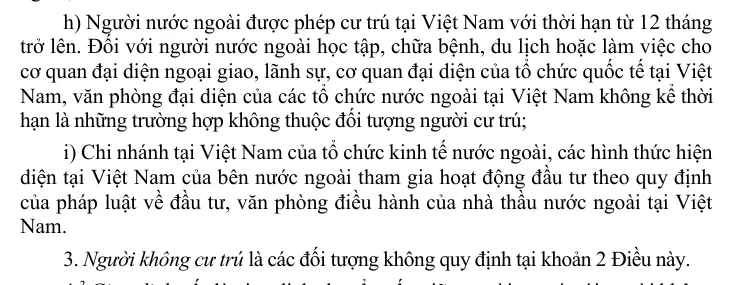
A foreigner permitted to reside in Vietnam for 12 months or longer is a resident. A foreigner in Vietnam to study, receive medical treatment or travel is not, whatever the length of stay. Everyone else is a non-resident.
An individual leaving with foreign-currency cash, dong cash or gold above the State Bank level must declare it to customs at the border gate. By passport, the thresholds are above US$5,000 or VND 15,000,000.
Foreign exchange may not be sent in postal items. Foreign-currency cash you hold may be kept, carried, given, bequeathed, sold to a licensed credit institution, or transferred or carried abroad.
1Check your statusA foreigner permitted to reside in Vietnam for 12 months or longer is a resident.
2Choose the routeFor money out, use a bank's SWIFT transfer; for money in, a bank account takes Wise or Western Union.
3Bring the papersAn identity paper, proof of foreign nationality and proof of lawful income.
4Ask for every charge in writingThe 0.2% fee excludes VAT, and a telex fee and intermediary-bank charges may come on top.
Not confirmed: Papers for MoneyGram and Western Union transfers out are not published; ask the branch. The telex figure at BIDV and any intermediary-bank charge are not in the 0.2% lines; ask the branch for both in writing. If you are paid in cash, the examples on the Vietcombank list may not fit; ask which paper it accepts.
Common questions
Can a foreigner send money out of Vietnam?
A non-resident, or a resident who is a foreigner, may send money abroad. Foreign currency held in an account can be transferred out, and lawful income in dong can be used to buy foreign currency and send that.
Can I use Wise to send money out of Vietnam?
Wise says VND can only be sent from a Wise account to bank accounts in Vietnam. For money out, use a Vietnamese bank's SWIFT transfer.
What does a Vietnamese bank charge to send money abroad?
Vietcombank's own fee is 0.2% of the transaction value, minimum US$5 and maximum US$300. BIDV charges 0.2%, minimum US$5, maximum US$5,000, plus a telex fee.
What does it cost to receive money from abroad?
Vietcombank says receiving SWIFT money into an account, or cashing it out at its counters, is free. BIDV says SWIFT receipts are free when received in VND.
What papers does the bank ask for?
Vietcombank's counter guide asks for an identity paper, a paper proving foreign nationality or non-resident status, and a paper proving the money is lawful income. BIDV lists a valid identity paper and papers proving the purpose.
Is there a limit on how much I can send?
Vietcombank sets the amount by your request, on proof that the money is lawful income. Wise caps a VND transfer at 499,999,999 VND.
Do I have to show a tax paper to send money out?
A resident or non-resident buying or transferring foreign currency abroad for current transactions does not have to present documents confirming that Vietnamese tax obligations are complete.
How much cash can I carry out of Vietnam?
By passport, cash above US$5,000 or VND 15,000,000 must be declared to customs.
Where are the bank branches in Nha Trang?
BIDV's notice of 25/11/2024 gives 1292, 2/4 Street for its Khanh Hoa branch. Vietcombank lists its Khanh Hoa branch head office at 17 Quang Trung Street, Nha Trang Ward.
General information checked against the sources listed above, not legal advice for your situation. Rules and office practice change; confirm with the immigration office or a licensed adviser before you act. See how guides are checked.